
If you are looking at wholesale business ideas in Kerala, start with the shops you can actually serve, not with a long list of “hot” products. Wholesale here usually means buying in bulk and selling to kiranas, hotels, bakeries, hardware shops or institutions. Your result depends on the licences your line needs, how long cash stays locked in stock and credit, and whether billing and delivery paperwork stay clean every day.
This guide shortlists practical wholesale lines that fit Kerala’s shop network, notes typical licences and working-capital load, and explains the billing habits that keep a godown honest. It is a planning note, not tax, legal or investment advice. Confirm current rules with your local body, a chartered accountant and the department that licences your trade.

What wholesale work looks like in Kerala
A wholesaler sits between a manufacturer, mill, importer or super-stockist and the retailer who faces the customer. You may run a cash-and-carry counter, take orders and deliver, or do both: nearby shops collect, farther ones get a van later in the day.
That is different from a retail shop, which sells to walk-in buyers. It is also different from being an appointed distributor for one company. A company distributor usually works a fixed territory, follows scheme calendars and reports primary and secondary sales. A general wholesaler can stock several brands and serve retailers who pay and collect on time. If you later want that appointed path, read how distributor margin in FMCG moves through the chain, because the cash cycle is not the same as buying and selling on your own account. A small godown near a market or town bypass, with vehicle access and dry storage, is more useful than a showroom.
Licences most wholesale businesses in Kerala need
Almost every godown needs a local-body trade licence. Kerala’s Local Self Government Department says trades need a licence from the local government. In urban bodies it is valid for five years; in a grama panchayat it is valid for one year unless renewed. Apply online through K-SMART for urban bodies and the citizen portal for grama panchayats, as explained on the LSGD trade licence page. If you employ staff on commercial premises, also complete the filing under the Kerala Shops and Commercial Establishments Act, 1960.
For a supplier of goods in Kerala, the general GST registration threshold is Rs 40 lakh of aggregate turnover, as covered in our note on the GST registration limit for goods. Registration can still be compulsory below that limit, for example if you make inter-state supplies. Many wholesalers register earlier because registered retailers want a tax invoice so they can claim input tax credit. Composition scheme is usually a poor fit for a B2B godown that sells across the state border or to GST-registered shops. Apply on the GST portal and keep the decision with your CA.
If you store or sell food — rice, pulses, oil, packaged grocery, bakery ingredients or produce — you also need FSSAI registration or a licence through FoSCoS. From 1 April 2026, FSSAI’s revised turnover thresholds (Food Authority order dated 13 March 2026) place registration at turnover up to Rs 1.5 crore, a state licence above that up to Rs 50 crore, and a central licence above Rs 50 crore. Confirm the current slab and kind of business, such as trader or wholesaler, on FoSCoS before you apply. If you weigh loose goods or pack them into smaller bags under your own label, ask Legal Metrology about stamped instruments and packer registration. If goods come from another state, raise e-way bills whenever a consignment crosses the threshold in GST rules, and keep the invoice or delivery challan aligned with the load.
Wholesale business ideas in Kerala you can evaluate by category
Treat the list as a shortlist, not a ranking. A “low-investment” start usually means one category, a tight SKU list and short credit — not a rupee figure that fits every town. Walk shops you already know and ask what they struggle to get on time before you book a godown.
FMCG and packaged grocery wholesale
Kiranas and small supermarkets restock biscuits, soaps, detergents and packaged snacks through the week because they cannot hold factory-level quantities. You will typically need a trade licence, GST in most B2B cases, and FSSAI if the cartons include food. Working capital is the real test: you pay the company or super-stockist on their terms, while many retailers ask for a week or two of credit plus scheme support. Record free goods and claims against the invoice. For bulk bills and price lists, see what differs in wholesale billing software in India compared with a retail POS.
Rice, pulses, edible oil and provisions
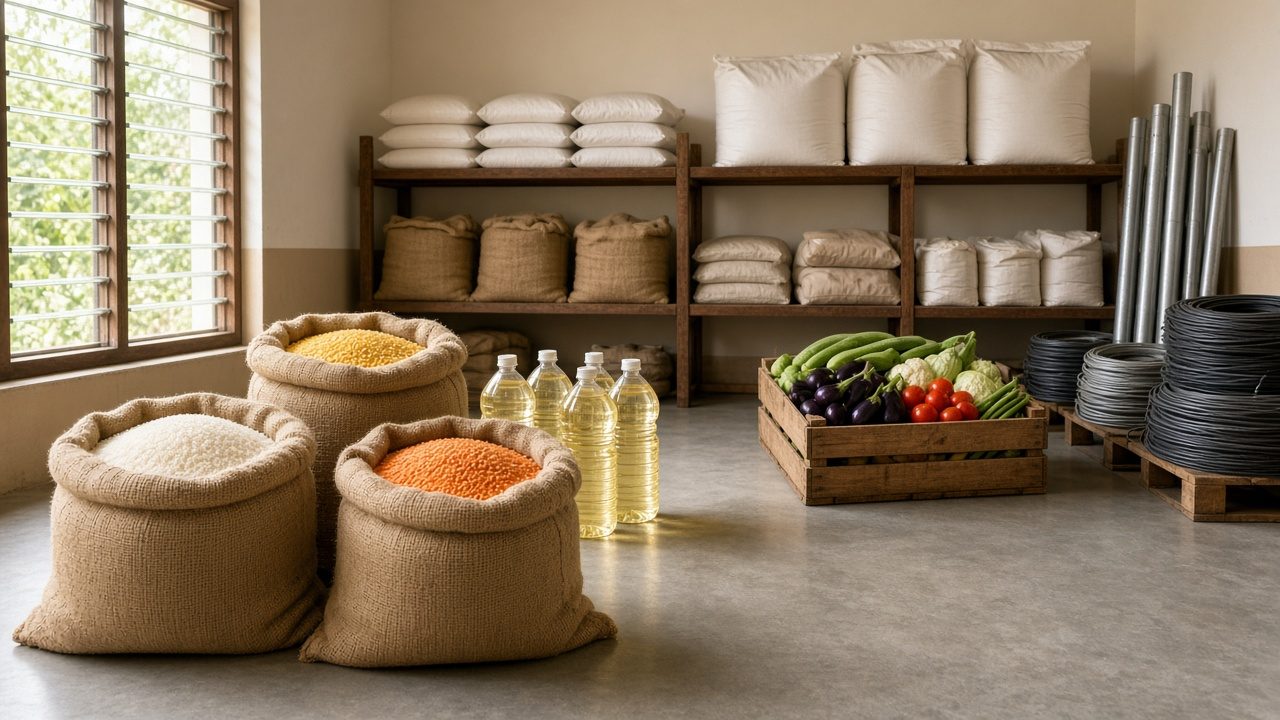
Provision shops across Kerala buy rice, atta, pulses, sugar and oil in bags rather than from a mill every time. A focused provisions wholesaler who keeps a few reliable grades, honest weighment and dependable delivery can build repeat orders without a full FMCG range. FSSAI applies besides the usual trade licence and GST. If you repack a 50 kg bag into smaller consumer packs under your name, Legal Metrology rules apply; many new operators skip repacking at the start. Track each item by bag size and grade, and bill in kilograms or bags so the invoice matches what left the godown.
Fruits and vegetables wholesale
Hotels, caterers and grocery shops buy produce often because it does not keep. That means frequent orders, and wastage if you over-buy. FSSAI, a trade licence and, depending on turnover and inter-state purchases, GST are the usual papers. Stock can turn in a day or two, yet cash goes out every morning at the market. Bill by weight, record spoilage, and rotate what arrived first and what will ripen first.
Bakery, cafe and hotel kitchen ingredients
Bakeries, tea shops, cafes and restaurants need flour, fats, yeast, packaging and dry groceries on a repeating cycle. FSSAI is required, along with a trade licence and GST. You can start narrower than a full grocery godown: bakery dry goods for nearby ovens, or kitchen staples for a cluster of restaurants. Customer-wise price lists help because a hotel and a small tea shop rarely buy at the same rate or pack size.
Hardware and building materials
Plumbing fittings, electrical accessories, fasteners, paints and tools move through hardware shops and contractors whenever construction or renovation is on. A trade licence and GST cover most of this line. It is rarely “low investment” if you try to stock everything: SKUs multiply by size, and contractors often ask for credit until a site milestone. Start with one family of goods you understand, set a written credit period, and use delivery challans when material leaves before the tax invoice. Units of measure — piece, metre, kilogram, set — must be correct or the stock book drifts quickly.
Stationery and school supplies
Notebooks, pens, files and office paper peak around school reopening, with quieter office demand through the year. The licence set is simpler than food or pharmacy: trade licence and GST when you cross the threshold or sell inter-state. Begin with fast-moving school items and add office lines after the first season. Working capital is tied up before the peak, then should come back if you avoid leftover fancy SKUs.
Pharmaceutical wholesale, only if you can meet the licence
Medical shops need licensed wholesalers, so the demand is real — but this is not a casual low-investment idea. Kerala’s Drugs Control Department treats wholesale as a separate licence from a retail medical shop. The department’s retail/wholesale SOP asks for an application in Form 19, 19B or 19C, a competent person with the credentials listed in that checklist, premises documents, a cold-chain declaration if you will stock drugs that need refrigeration, and a pre-licence inspection. The stated timeline in that SOP is 28 days. Use the current route published by the Kerala Drugs Control Department. Batch number and expiry date are part of daily billing. If you cannot staff a competent person and a compliant godown, choose another line on this list.
How to judge working capital before you pick a line
The money you need is not only the first lorry of stock. It is stock in the godown, plus credit you have already given retailers, minus credit your supplier has given you:
Working capital tied up = value of stock + receivables from shops − payables to suppliers.
Here is an illustrative example with made-up figures for a small provisions wholesaler in Thrissur. Suppose stock on hand is Rs 4,00,000, shops buy about Rs 6,00,000 a month on 15 days’ credit, and your miller gives 7 days on purchases of about Rs 5,00,000 a month. Receivables are roughly Rs 6,00,000 × 15 ÷ 30 = Rs 3,00,000. Payables are roughly Rs 5,00,000 × 7 ÷ 30 = Rs 1,16,667. Money tied up is about Rs 4,00,000 + Rs 3,00,000 − Rs 1,16,667 = Rs 5,83,333. These numbers are only for the arithmetic. Your town and product line will differ.

Cash-and-carry lowers receivables. Long credit wins volume quickly and then stalls when two or three retailers slow down together. Set a written limit and period for each shop, and do not raise a limit just because last month’s order was large. Our guide on how to set a credit limit for customers walks through a simple method. Lines that often need less cash to begin are a focused stationery range, a short accessories list, or bakery dry goods supplied nearby. Lines that usually need more cash are full-line FMCG on retailer credit, hardware sold to contractors, and licensed pharmaceutical wholesale.
Billing and stock habits that keep a wholesale counter honest
A retailer often scans a few pieces for a walk-in customer. A wholesaler may bill thirty to eighty lines, apply a customer-specific price list, mention batch or bag size, print a delivery copy and still need to know what remains on the rack. That is why shops outgrow a simple retail screen and look for distributor billing software or a wholesale-ready setup.
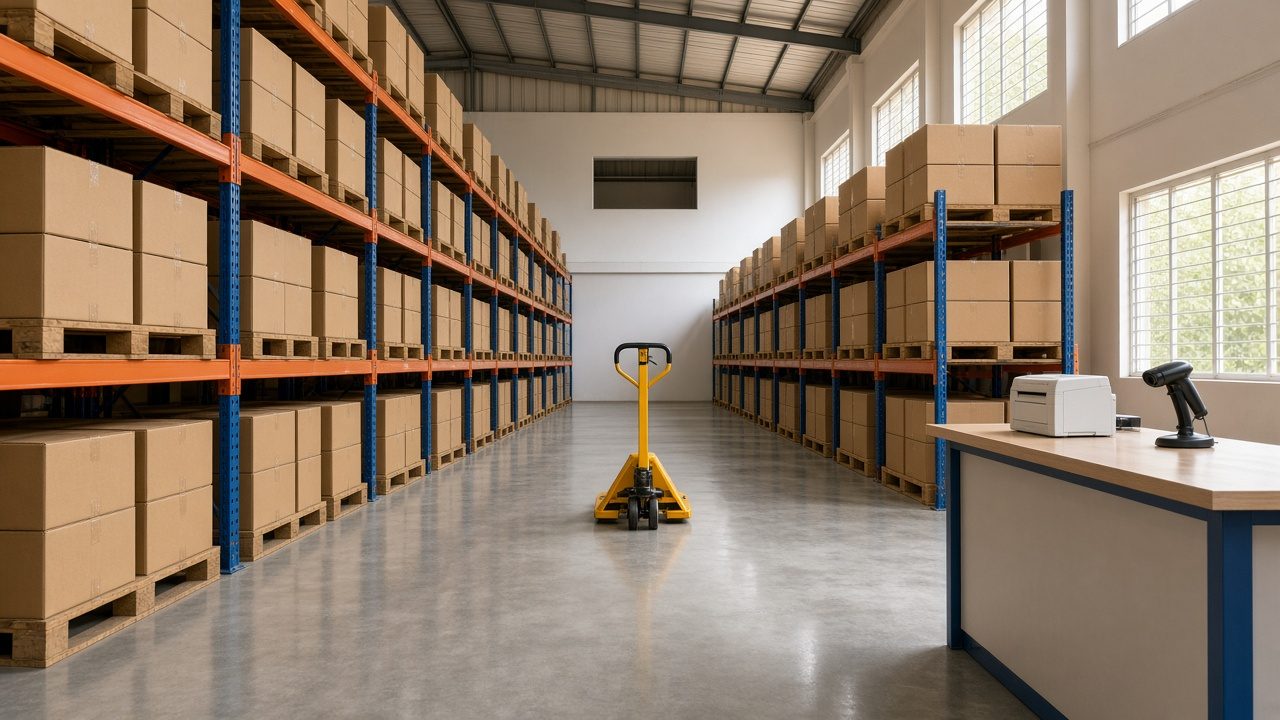
Raise a proper GST tax invoice for every B2B supply, with the buyer’s GSTIN when they have one. Use a delivery challan when goods move before the invoice is raised, and convert it promptly so stock and tax books do not drift apart. If you sell the same SKU at different rates to different classes of retailer, store those rates as price lists instead of typing a new figure each time. Set a reorder level on the twenty or thirty items that must never go to zero, and count a slice of the godown every week rather than waiting for an annual surprise.
A practical first 90 days
Pick one category and list twenty shops you can reach in a morning round. Visit them before you buy stock and note pack sizes, favourite grades and how they pay. In parallel, apply for the trade licence and any FSSAI or sector licence your line needs, and decide the GST position with your CA. Lock two supply sources for core items, open the item master with about thirty well-chosen lines, and write a credit rule — for example cash for the first four weeks, then a small limit for shops that paid on time. Set up billing on day one: enter opening stock, print a test invoice and a delivery challan, and review weekly which items sold, which slept and who paid late.
Where Caddayn Biller fits
Once orders, price lists and stock quantities start moving every day, a notebook stops being enough. Caddayn Biller handles GST billing, barcode billing, inventory with low-stock and reorder alerts, units of measure, price lists and bulk billing. It also records UPI, card and cash receipts and runs as a Windows app and a web app, so the godown desk and a second login can follow the same books.
It will not replace your trade licence, your CA or the credit judgement only you can make. What it can do is keep invoices, stock and customer-wise sales in one place while you grow from a tight first category into a steadier wholesale routine. You can download Caddayn Biller and try that workflow with your own item list before you widen the godown.
Frequently asked questions
What counts as a low-investment wholesale business in Kerala?
Here it means one product family, a modest godown, a short SKU list and little or no retailer credit. Stationery, accessories or bakery dry goods often fit that shape better than full-line FMCG, hardware on contractor credit, or pharmaceutical wholesale. Judge the cash cycle rather than copying someone else’s total.
Do I need GST on the first day of wholesale?
Not always, if you only supply goods inside the state and stay under the threshold that applies to you. Inter-state supply can make registration compulsory even then, and many retailers prefer a GST invoice so they can claim input tax credit. Confirm your case with your CA before you print the first bill.
Can I start a wholesale business from home in Kerala?
A house that cannot take a loading vehicle, store bags safely or meet local-body and FSSAI conditions is a weak base. Most operators rent a small godown near a market. Ask the local body first if you use part of a house; the trade licence is tied to the premises.
Is pharmaceutical wholesale a good first business?
Only if you can obtain a wholesale drug licence, appoint a competent person, pass inspection and run batch-and-expiry control every day. It is a regulated trade, not a shortcut around the other ideas on this page.
What is the difference between a wholesaler and a distributor?
A wholesaler buys and sells on their own account and may stock several brands. A distributor is usually appointed by a company for a territory and follows that company’s schemes and stock norms. You can begin as a general wholesaler and take up a distribution line later if the cash cycle still makes sense.
Licence rules, GST thresholds and FSSAI slabs can change. Treat this article as a practical map of wholesale business ideas in Kerala and confirm the current position with the local body, FoSCoS, the GST portal and your adviser before you commit money or print invoices.