
The GST registration limit for goods is one of the first numbers a new shop owner asks about, and one of the most misread. In Kerala and most other states, a business that sells only goods does not have to register under GST until its aggregate turnover crosses ₹40 lakh in a financial year. But that ₹40 lakh comes with conditions, a few states use ₹20 lakh, and some businesses must register from the first rupee. This guide explains the limits in plain words, shows how to work out your own turnover, and helps you decide whether registering early makes sense for your shop.
A quick note before we start: this is a practical explainer for shop owners, not legal advice. GST rules change through notifications, so confirm your position with your tax consultant or on the GST portal before you decide.
GST registration limit for goods at a glance
From 1 April 2019, the Central Government’s Notification No. 10/2019–Central Tax exempted businesses that supply only goods from registration as long as their aggregate turnover in the financial year stays within ₹40 lakh. States were allowed to choose whether to adopt this higher limit. That is why the answer depends on where you sell from.
| Your situation | Registration needed when aggregate turnover crosses |
|---|---|
| Only goods, in Kerala, Tamil Nadu, Karnataka, Maharashtra and most other states and UTs | ₹40 lakh |
| Only goods, in Arunachal Pradesh, Manipur, Meghalaya, Mizoram, Nagaland, Puducherry, Sikkim, Telangana, Tripura or Uttarakhand | ₹20 lakh (₹10 lakh in Manipur, Mizoram, Nagaland and Tripura) |
| Services, or goods and services together, in most states including Kerala | ₹20 lakh |
| Services, or goods and services together, in Manipur, Mizoram, Nagaland and Tripura | ₹10 lakh |
| Ice cream, pan masala or tobacco products | ₹40 lakh limit does not apply; the general ₹20 lakh (or ₹10 lakh) limit is used |
| Any business covered by compulsory registration (see below) | No limit; register before you start those supplies |
Jammu and Kashmir, Ladakh and Assam also adopted the ₹40 lakh limit for goods. If your shop is in Kerala and you sell only goods, the number that matters to you is ₹40 lakh.
“Exclusive supply of goods” is the condition people miss
The ₹40 lakh limit is only for a person engaged in the exclusive supply of goods. If your shop also earns from a taxable service, the lower ₹20 lakh limit applies to your whole turnover, not just the service part. Common examples in Kerala shops:
- A mobile accessories shop that also does paid phone repairs.
- A hardware store that charges separately for fitting or installation work.
- A stationery shop that also runs a photocopy, printing or lamination counter.
- A bakery that also caters events, or rents out a hall.
For these businesses the practical limit is ₹20 lakh, so plan for registration much earlier than a pure trader would.
What counts as aggregate turnover
The limit is tested against aggregate turnover, defined in Section 2(6) of the CGST Act. It is the total value of all taxable supplies, exempt supplies, exports and inter-state supplies made by everyone under the same PAN, worked out on an all-India basis. It does not include the GST itself (CGST, SGST, IGST or cess), and it does not include purchases on which you pay tax under reverse charge.
Three points surprise most shop owners:
- Exempt sales are counted. If you sell fresh vegetables, unbranded rice or other GST-exempt goods along with taxable items, those exempt sales still add to your aggregate turnover for the limit.
- All branches under one PAN are added together. Two small shops owned by the same proprietor, one in Thrissur and one in Palakkad, are not tested separately. Their sales are combined.
- Turnover is gross sales value, not profit. A shop that sells ₹42 lakh of goods in a year has crossed ₹40 lakh even if its margin is only a few lakh.
One related rule: a person who deals only in goods that are wholly exempt from GST, or not taxable at all, is not liable to register, whatever the turnover. That is rare for a general store, because most shops sell at least some taxable items.
A worked example from a Kerala grocery
Take an illustrative grocery in Kottayam owned by one proprietor. During the financial year it sells:
- Packaged and branded groceries, soaps and snacks (taxable): ₹26,00,000
- Loose fresh vegetables and fruits (exempt): ₹9,50,000
- Milk and curd sold loose (exempt): ₹3,00,000
Taxable sales alone are only ₹26 lakh, which tempts the owner to think he is far below the limit. But aggregate turnover is ₹26,00,000 + ₹9,50,000 + ₹3,00,000 = ₹38,50,000. He is just ₹1.5 lakh away from ₹40 lakh. A busy festival month or a second counter would push him over, so he should be tracking turnover every month, not checking once in March.
Now suppose the same owner also opens a small service counter for bill payments and recharges that earns commission. He is no longer an exclusive supplier of goods, so the ₹20 lakh limit applies. At ₹38.5 lakh he would already be well past it.
When you must register even below the limit
Section 24 of the CGST Act lists cases where registration is compulsory regardless of turnover. For goods businesses, the ones that matter most are:
- Inter-state sales of goods. If you sell and send goods to a buyer in another state, for example a Kasaragod distributor supplying shops in Mangaluru, you need registration even if total turnover is small.
- Selling through e-commerce platforms that collect TCS. Since 1 October 2023, small sellers of goods on such platforms can skip registration if they stay under the threshold, sell only within one state, make no inter-state supply and get an enrolment number on the GST portal using their PAN. Outside those conditions, registration is required.
- Selling on behalf of someone else as an agent, such as a commission agent selling goods for a principal.
- Casual taxable persons, for example a trader who sets up a stall at an exhibition or festival fair in a state where they have no fixed place of business.
- Businesses that must pay tax under reverse charge on certain purchases.
You can read the full list in Section 24 on the CBIC tax information portal. Once you become liable, apply within 30 days. Our guide to IGST and inter-state billing explains how bills change once you start selling across state lines.
Voluntary GST registration: pros and cons for small shops
Any business can register voluntarily even below the limit. Whether that helps depends on who your customers are.
Reasons to register early
- Your buyers are businesses. Hotels, restaurants, institutions and other shops usually want a tax invoice with your GSTIN so they can claim input tax credit. Without it, you may lose these orders.
- You can claim input tax credit on purchases and on things like billing hardware, which reduces the tax cost built into your prices. Our explainer on input tax credit with an example shows how this works.
- Larger suppliers and distributors often prefer to deal with registered buyers, and some platforms or tenders ask for a GSTIN.
- You are close to the limit anyway. Registering a little early avoids a rushed changeover in the middle of a busy season.
Reasons to wait
- Your customers are mostly walk-in households who cannot use input tax credit, so adding GST may simply raise your shelf price compared with an unregistered neighbour.
- Compliance work starts immediately: correct tax invoices, returns every month or quarter, and record keeping. Missed returns lead to late fees.
- Your turnover is far below the limit and unlikely to approach it soon.
If you register but your turnover is modest, ask your consultant about the GST composition scheme. It has simpler returns and a flat rate on turnover, but you cannot collect tax from customers or claim input tax credit, and it does not suit every business. Composition dealers issue a bill of supply instead of a tax invoice.
How to track the limit month by month
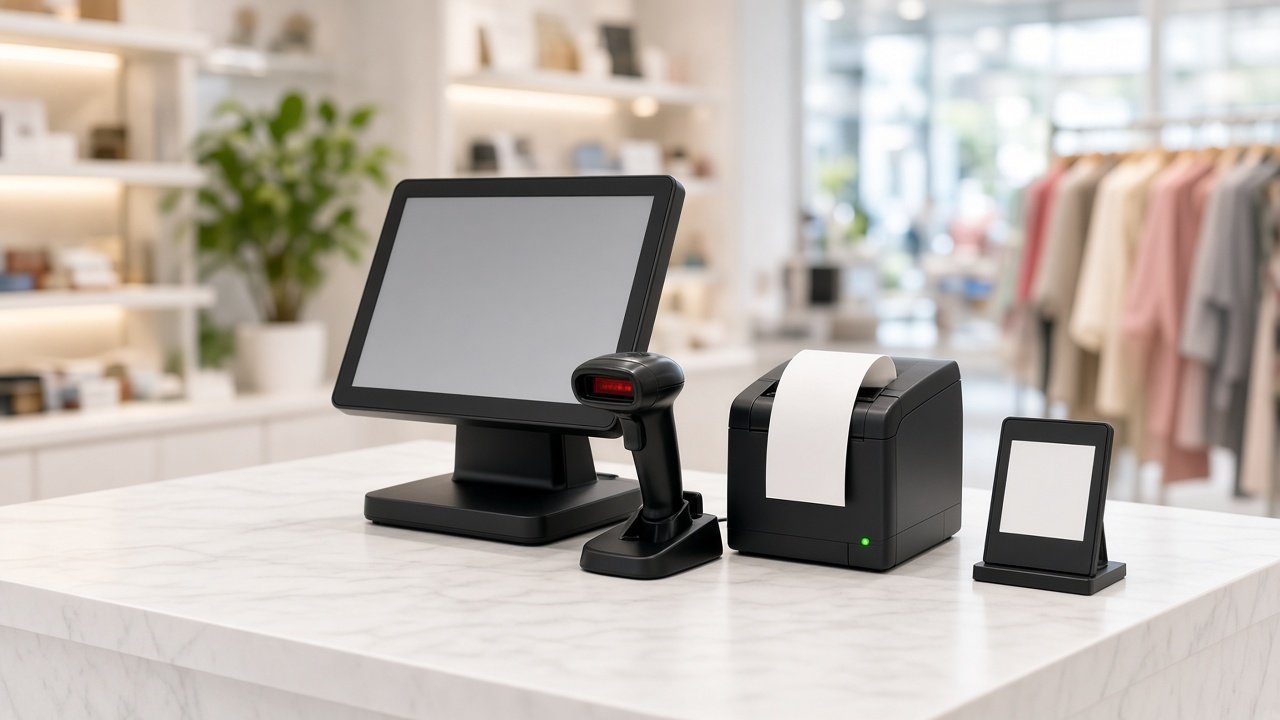
The simplest way to avoid crossing the GST registration limit for goods without noticing is to track turnover every month. A practical routine:
- Bill every sale, including exempt items and cash sales. A notebook total at the end of the day almost always misses something.
- Tag items as taxable or exempt in your item master, so reports show both totals separately and together.
- Combine all branches and counters under the same PAN when you check the running total.
- Set a warning level well below the limit, for example ₹30 lakh for a goods-only shop in Kerala, and talk to your consultant when you reach it.
- Keep purchase bills organised from day one. After registration you will need them to claim input tax credit.
Good billing software makes this routine almost automatic. With GST billing software for retail shops, every bill adds to day-wise and month-wise sales reports, so you can see your running turnover at any time. When you do register, the same system can start printing compliant tax invoices with your GSTIN, HSN codes and tax split, as covered in our guide to GST invoice software for shops.
Common mistakes with the GST registration limit
- Counting only taxable sales and leaving out exempt items.
- Checking each branch separately when they share one PAN.
- Using the ₹40 lakh goods limit while also earning from a taxable service.
- Assuming online selling or inter-state supply is covered by the threshold without checking the conditions.
- Waiting until the year-end to add up sales, by which time the limit may have been crossed months ago.
- Registering and then not filing returns because sales were “too small”, which still attracts late fees.
Get ready for GST with Caddayn Biller
Whether you are below the limit today or about to cross it, clean billing records make the decision easy. Caddayn Biller gives Indian shops GST billing, barcode billing, inventory with low-stock alerts, multi-branch reporting and UPI, card and cash payments, on a Windows app and a web app. Start by billing every sale and watching your monthly totals, and switch on GST invoices the day you register. Download Caddayn Biller to try it in your shop. If you are still choosing a system, our guide to billing software for small business in India lists what to check.
FAQ
What is the GST registration limit for goods in Kerala?
Kerala adopted the higher limit, so a business engaged only in supplying goods needs to register once its aggregate turnover in a financial year crosses ₹40 lakh. If it also supplies taxable services, the limit is ₹20 lakh.
Is the ₹40 lakh limit based on taxable sales or total sales?
It is based on aggregate turnover, which includes taxable, exempt, export and inter-state supplies under the same PAN across India, excluding the GST amount itself.
Do I need GST registration to sell goods to another state?
Generally yes. Inter-state taxable supply of goods requires compulsory registration regardless of turnover. A limited exception exists for small sellers on e-commerce platforms who sell within one state only and meet the enrolment conditions.
Can a small shop register under GST voluntarily?
Yes. Voluntary registration lets you issue tax invoices and claim input tax credit, which helps if you sell to businesses. It also brings regular return filing, so weigh both before applying.
How soon must I apply after crossing the limit?
You must apply within 30 days from the date you become liable to register. Track turnover monthly so you see it coming rather than finding out after the fact.