
If you are planning how to start a supermarket business in Kerala, the hard part is rarely the shelves or the stock. It is getting the order right: which registrations come first, how much space you really need, which suppliers to lock in, and how the billing counter will cope on a busy Saturday evening. This guide walks through that order step by step for a first-time owner, whether you are converting a family provision store in Thrissur into a self-service format or opening a fresh 1,500 sq ft store near a housing colony in Kakkanad.
The rules and portals below were correct at the time of writing, but licence fees, turnover limits and local-body procedures change. Treat this as a planning checklist and confirm the details with your panchayat, municipality or corporation office, and with a tax consultant, before you sign a lease.
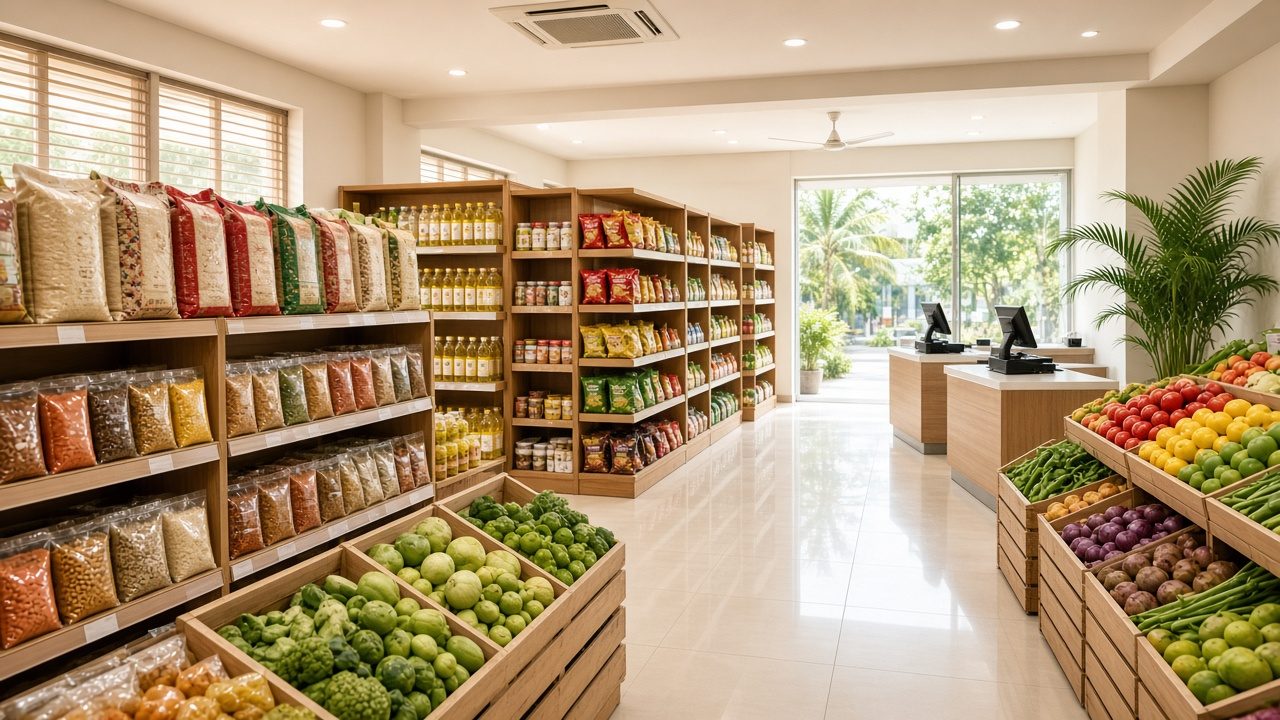
Step 1: Decide the format before you choose the building
“Supermarket” covers very different businesses in Kerala. Settle the format first, because it decides the space, the licences and the money you need.
Common formats
- Neighbourhood self-service store: groceries, staples, packaged food, household and personal care, maybe a small vegetable section. Usually one or two billing counters.
- Mid-size supermarket: adds fresh produce, a chilled section for dairy and frozen items, a wider non-food range and three or more counters. Often has a small stockroom and a loading area.
- Supermarket with home delivery: the same store plus phone or WhatsApp orders and delivery staff. This needs good stock accuracy, because promising an item that is not on the shelf hurts trust quickly.
Questions to answer on paper
- Who are your customers: families in flats, daily-wage workers, students, office goers on the way home?
- What do they already buy from nearby kirana shops, and what do they travel elsewhere for?
- Will you sell loose items (rice, pulses, sugar, spices) weighed at the counter, packed items only, or both?
- Will you repack loose goods into your own packets? This affects your Legal Metrology registration (see Step 2).
Spend a few evenings and one weekend outside the location you have in mind. Count footfall at different times, note how people arrive (walking, scooter, car) and check whether there is parking space. A store that is easy to reach with a two-wheeler often beats a bigger store on a busy junction with nowhere to stop.
Step 2: Licences and registrations for a supermarket in Kerala
Most new owners worry about licences more than anything else. The list is long but manageable if you take it in this order.

1. Business structure, PAN and bank account
Decide whether you will run the store as a sole proprietorship, a partnership firm, an LLP or a private limited company. This decides whose PAN is used, how profits are taxed and who signs the other applications. Open a current account in the business name once the structure is settled.
2. Local body trade licence
Every shop in Kerala needs a licence from the local self-government body where it is located: the grama panchayat, municipality or corporation. Supermarkets are usually covered under the trade licence (often still called the D&O licence) category. Urban local bodies now handle most applications online through the K-SMART portal, while panchayat procedures can differ, so ask the local office which route applies to you. Keep the building permit and ownership or rent documents ready, because the licence is tied to the premises.
3. Shops and Commercial Establishments registration
Shops that employ workers are registered under the Kerala Shops and Commercial Establishments Act, 1960, through the Labour Department. The registration covers working hours, holidays and the records you must keep for staff. If you will employ cashiers, packers and helpers from day one, do this early.
4. FSSAI registration or licence
Because a supermarket sells food, you need either a basic FSSAI registration or an FSSAI licence. Which one depends on your expected annual turnover, and the limits are revised from time to time, so check the current categories and apply on the FSSAI FoSCoS portal. Display the certificate at the store and put the number on your bills and on any packets you pack yourself.
5. GST registration
GST registration becomes compulsory once your turnover crosses the threshold that applies to your state and type of supply, and many supermarkets register from the start so that they can claim input tax credit on purchases and issue proper tax invoices. Apply on the GST portal and discuss with your consultant whether the composition scheme or regular registration suits your plan. Our guide on supermarket billing software explains how GST rates are set up item by item once you are registered.
6. Legal Metrology
Every weighing scale used for sale must be verified and stamped by the Legal Metrology Department, and re-verified at the intervals the department fixes. If you repack rice, pulses, spices or snacks into your own packets, you also need packer registration and must print the declarations required on packaged goods. Details are on the Kerala Legal Metrology website.
7. Other registrations to check
- Udyam registration: free online MSME registration that can help with bank loans and some government schemes.
- Fire safety: depending on the building’s size and use, the Fire and Rescue Services department may need to issue a NOC.
- Signboard permission: some local bodies require separate permission for large signboards.
- Special items: selling medicines needs a drug licence, which is a separate business. Our post on how to start a medical shop in Kerala covers it.
Step 3: Plan the investment without guesswork
We will not quote a single “total cost” figure, because rent, interiors and opening stock differ widely between, say, a ground-floor shop in Kottayam town and a new building in a Malappuram suburb. Instead, build your own budget sheet with these heads and get two or three real quotes for each:
- Premises: advance or deposit, monthly rent, and any repairs the landlord will not cover.
- Interiors and fixtures: racks, gondolas, vegetable crates, wiring, lighting and flooring.
- Equipment: refrigerators and freezers, weighing scales, billing computers, receipt and barcode printers, scanners, CCTV and power backup.
- Opening stock: usually the biggest single item. Start narrow and deep in fast movers, then widen the range.
- Licences and professional fees: local body, FSSAI, consultant, and Legal Metrology stamping.
- Working capital: salaries, electricity, rent and supplier payments for the first few months, before sales settle.
The working capital line is the one owners most often underestimate. Suppliers may give credit, but many want cash or short credit from a new store until you have a payment record with them. To see how margins differ between rice, oil, snacks and household items, read our guide to supermarket profit margin in India before you fix your sales targets.
Step 4: Space, layout and fixtures
A good layout makes customers walk past more of your range without feeling lost. A few practical rules:
- Keep daily essentials such as milk, bread, eggs and rice towards the back or sides, so customers pass other aisles on the way.
- Put the billing counters near the exit, with enough room for a short queue that does not block an aisle.
- Keep the vegetable and fruit section well lit and near a water point for cleaning.
- Put chilled and frozen units on a dedicated electrical line with power backup. Kerala’s monsoon brings power cuts, and spoiled dairy is a direct loss.
- Leave aisles wide enough for a trolley and a person to pass each other.
- Keep a stockroom or at least a separated back area, so cartons are not opened on the shop floor.
Step 5: Suppliers and opening stock
Your supplier list decides your margins and your stock-outs. Build it in layers:
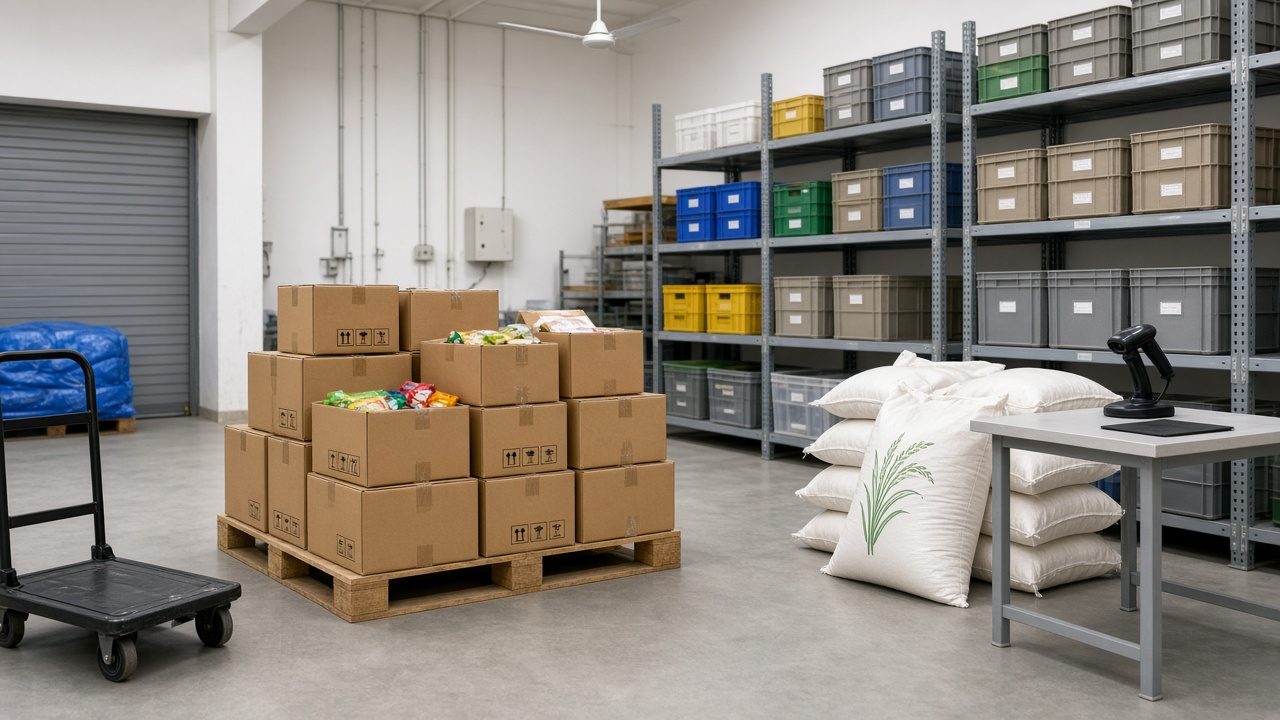
Who to onboard
- FMCG distributors for branded packaged goods, soaps, detergents and personal care. Ask each about the beat day, minimum order, credit days and how damaged or expired goods are taken back.
- Wholesalers for rice, pulses, sugar, spices and oil, especially if you plan to sell loose or repack.
- Local producers for items customers in your area expect, such as banana chips, pickles, coconut oil or bakery items. Check that they have their own FSSAI registration.
- Vegetable and fruit suppliers who can deliver daily and take back unsold produce, if possible.
Getting the item master right
Before opening day, every item needs a clean record: name, category, unit (kg, packet, litre, piece), purchase price, selling price, MRP, GST rate and HSN code, and a barcode. Packaged items usually carry the manufacturer’s barcode. For loose and repacked items you will print your own labels. Our guide on how to get barcodes for products in India explains when you need GS1 codes and when in-store codes are enough.
Enter the opening stock quantity for every item once the racks are filled, not from the purchase bills alone. A careful count now saves months of mismatches. The steps are in our post on opening stock entry in billing software.
Step 6: Billing counters, staff and controls
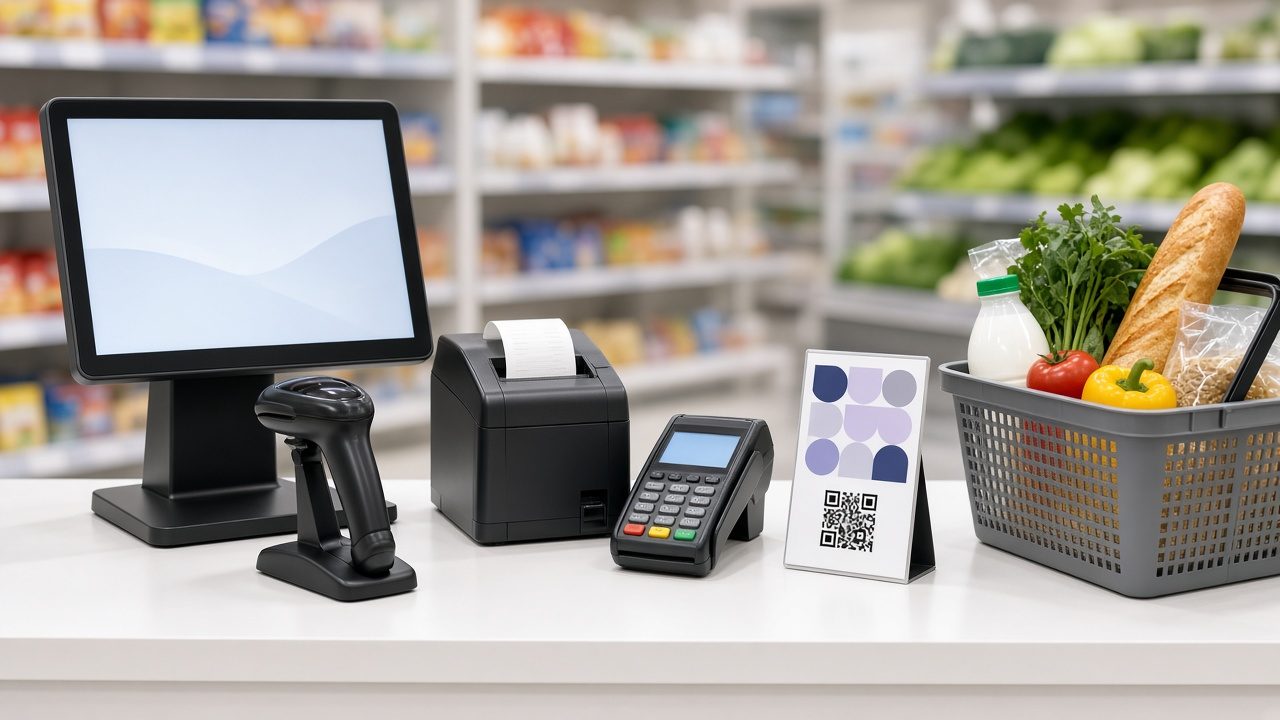
The billing counter is where customers judge your store. A slow or confusing bill at the counter undoes a good shelf display. Plan for:
- Enough counters for your peak: evenings, weekends and the days around Onam and Vishu are very different from a Tuesday afternoon.
- Barcode scanning and weighing at the counter for loose items, so cashiers do not type prices from memory.
- All payment modes: cash, UPI and cards, recorded against each bill so the day-end cash matches.
- User logins for each cashier, with discounts and bill cancellations limited to the owner or manager.
- Low-stock alerts so fast movers are reordered before the shelf goes empty.
Train staff for at least two or three days before opening, using test bills. Show them how to handle a returned item, a failed UPI payment and a customer asking for a GST bill with their GSTIN.
Opening-day checklist
- Licences and certificates received and displayed where required (FSSAI, trade licence, shop registration).
- Weighing scales stamped and placed at the counters and the vegetable section.
- Item master complete, with GST rates and HSN codes checked by your consultant.
- Opening stock counted and entered; a few test bills printed and checked.
- UPI QR codes, card machine and receipt printers tested at every counter.
- Cash float ready at each counter, with a day-end closing routine agreed.
- Fridges and freezers running at the right temperature for at least a day before stocking.
- Backup power tested for billing systems and chilled units.
- Staff roles clear: who receives deliveries, who refills shelves, who handles complaints.
Run your new supermarket on Caddayn Biller
Caddayn Biller is billing and inventory software built for Indian retailers, with a dedicated Supermarket ERP. It supports barcode billing, GST billing, units of measure for loose and packed items, price lists, inventory with low-stock and reorder alerts, multi-branch, customer loyalty, and cash, UPI and card payments. It runs as a Windows app and a web app. If you are setting up several counters, our Kerala supermarket software guide covers multi-counter setup, and smaller stores can compare notes with our kirana billing software guide. When you are ready, download Caddayn Biller and set up your item master before opening day.
Frequently asked questions
Which licences are needed to start a supermarket in Kerala?
Typically a local body trade licence, registration under the Kerala Shops and Commercial Establishments Act, FSSAI registration or licence, GST registration, and Legal Metrology verification for weighing scales. You may also need packer registration if you repack goods, and a fire NOC depending on the building. Confirm the exact list with your local body and consultant.
Is GST registration compulsory for a new supermarket?
It becomes compulsory once turnover crosses the applicable threshold, but many supermarkets register from the start so they can claim input tax credit and issue tax invoices. Your consultant can tell you whether regular registration or the composition scheme fits.
How much space do I need for a small supermarket?
There is no fixed rule. It depends on your range, the number of counters and whether you keep fresh produce and chilled items. Plan the aisles, counters and stockroom on paper for the specific building before signing the lease.
Can I sell loose rice and spices in my supermarket?
Yes, as long as your scales are verified and stamped. If you pack them into your own packets for display, you need Legal Metrology packer registration and must print the required details on each packet.
When should I set up billing software?
At least a week or two before opening. That gives you time to build the item master, print barcode labels, enter opening stock and train cashiers on test bills.