
Every shop owner has stood at the counter with a new product in hand and wondered what number to write on the shelf tag. Price it too high and it sits on the shelf; price it too low and you sell a lot but make almost nothing. This guide explains how to set selling price for a product in an Indian retail shop, step by step: working out your real cost, adding a margin that protects your profit, checking the MRP and nearby shops, rounding to prices customers like, and keeping your price list up to date when supplier rates change.
Start With Your Real Cost, Not the Purchase Rate
The figure printed on the supplier’s bill is only part of what an item costs you. Before you think about margin, work out the landed cost of one unit, which is everything you pay to get it onto your shelf.
- Purchase rate after any trade discount the supplier gives on the bill.
- Freight and loading, for example the auto or tempo charge to bring goods from the wholesale market, divided across the units in that load.
- Breakage, spoilage or repacking loss, if you buy loose and pack in smaller quantities, or the item is fragile.
- GST on purchase, but only if you cannot claim it back. A regular GST-registered shop claims input tax credit, so GST is not part of its cost. A shop under the composition scheme cannot claim input tax credit, so for that shop the GST paid on purchase is a real cost and must be added.
Free goods change the cost too. If a distributor gives 10 + 1 free, your cost per unit is the bill amount divided by 11, not 10. Many shop owners forget this and set prices on the wrong base. If you want a refresher on reading inclusive and exclusive amounts, see our guide on how to calculate GST from the total amount.
Three Ways to Set a Selling Price
Most Indian retailers use a mix of three methods. Knowing all three helps you choose the right one for each kind of product instead of using one fixed percentage for the whole shop.
1. Cost-plus pricing
You take your landed cost and add the margin you want. This is the most common method for loose goods, own-packed items, hardware, stationery and anything without a printed MRP.
The key is to decide whether you are adding a markup (a percentage of cost) or aiming for a margin (a percentage of the selling price). They are not the same. A 25% markup on a ₹100 cost gives ₹125, which is only a 20% margin on the selling price. If you want a true 25% margin, the formula is:
Selling price (before GST) = Landed cost ÷ (1 − target margin)
Our article on markup vs margin has a full conversion table if you want to go deeper.
2. Competition-based pricing
For items customers buy often and remember the price of, such as sugar, cooking oil, popular biscuits or a common bulb, your neighbours’ prices matter more than your formula. Check what two or three nearby shops and the closest supermarket charge, then decide whether you will match, stay slightly above (if you offer delivery, credit or better service) or go slightly below to pull customers in. Do not try to beat everyone on everything; pick a few visible items where your price is sharp, and earn your margin on the rest.
3. MRP-anchored pricing
For packaged goods with a printed Maximum Retail Price, the MRP is the ceiling. Under India’s Legal Metrology (Packaged Commodities) Rules, you cannot charge more than the MRP printed on the pack. Your decision is how much discount, if any, to give below MRP.
Because your margin is fixed by the gap between your purchase rate and the MRP, every rupee of discount comes straight out of profit. That is why it pays to calculate the margin before you put up a “5% off MRP” board.
Worked Example: How to Set Selling Price for a Product Step by Step
Here is an example with made-up numbers for a regular GST-registered grocery shop in Thrissur. The item is a packaged product that attracts 18% GST and has an MRP of ₹140.
- Landed cost: purchase rate ₹80 (excluding GST) + freight share ₹2 + handling and breakage allowance ₹1 = ₹83. GST on purchase is not added because the shop claims input tax credit.
- Target margin: the owner wants at least 25% margin on this category.
- Price before GST: ₹83 ÷ (1 − 0.25) = ₹83 ÷ 0.75 = ₹110.67.
- Add GST: ₹110.67 × 1.18 = ₹130.59 including tax.
- Check MRP: ₹130.59 is below the ₹140 MRP, so it is allowed.
- Round to a price point: the owner considers ₹129 and ₹135.
Now check the margin at each rounded price, because rounding down can quietly push you below your floor:
- At ₹129: price before GST is ₹129 ÷ 1.18 = ₹109.32. Profit is ₹109.32 − ₹83 = ₹26.32. Margin is ₹26.32 ÷ ₹109.32 = about 24.1%, just under the 25% floor.
- At ₹135: price before GST is ₹135 ÷ 1.18 = ₹114.41. Profit is ₹31.41. Margin is about 27.5%.
If nearby shops sell the same item at ₹135 or more, ₹135 is the better choice. If a competitor sells it at ₹129 and it is a high-visibility item, the owner may accept the slightly lower margin on purpose. The point is that the decision is now made with numbers, not guesswork.
What a discount off MRP really costs
Take a different item with an MRP of ₹50 and a cost to you of ₹43 including GST. (When the same GST rate applies on both purchase and sale, you can compare inclusive amounts and the margin percentage comes out the same.) Selling at MRP gives ₹7 profit, a margin of 14%. Offer 5% off MRP and you sell at ₹47.50: profit drops to ₹4.50 and margin to about 9.5%. A small discount on the board removed roughly a third of your profit on that item, so you would need to sell noticeably more units just to earn the same rupees.
Set a Margin Floor for Each Category
A margin floor is the lowest margin you will accept on a category before you stop and think. It stops slow erosion, where one small discount here and one rounding-down there leave you working for very little.
- Fast-moving staples such as rice, sugar, atta and oil usually carry thin margins because customers compare prices. Your floor here may be low, but you earn through volume.
- Slower or specialised items such as dry fruits, imported snacks, cosmetics, hardware fittings or stationery sets can carry a higher margin because fewer customers compare and they value availability.
- Perishables like vegetables, bread and dairy need extra margin to cover wastage. If you throw away one in ten, your pricing has to account for it.
Choose your own floors based on your past sales and costs; there is no single correct percentage for every shop. Once you have them, check them every month using your gross profit report. Our guide on how to calculate gross profit in retail shows how to read margins at item, category and store level.
Round to Prices Customers Like
Once you know the minimum acceptable price, rounding is where you turn a calculated number into a shelf price.
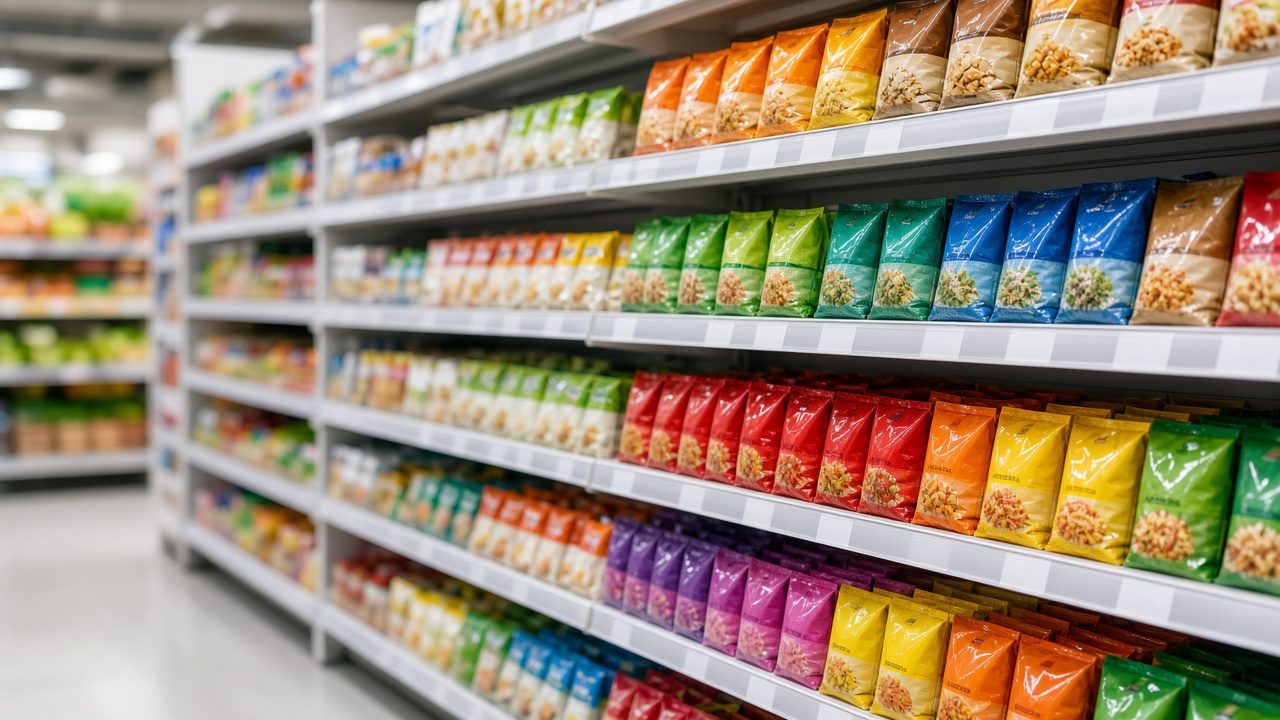
- Charm prices such as ₹99, ₹149 or ₹199 work well for packaged goods, gifts and household items where customers read the first digit.
- Round prices ending in 0 or 5 make cash change easier and suit loose items and fast billing at a busy counter.
- Keep steps consistent within a range. If a 500 g pack is ₹65 and the 1 kg pack is ₹135, customers will notice that the bigger pack is not better value. Check the per-kg or per-litre price across pack sizes before finalising.
- Never round above MRP. If rounding up would cross the printed MRP, round down instead.
Keep Your Price List Updated When Costs Change
Setting a price once is not enough. Supplier rates change, freight changes, and GST rates are sometimes revised. If your shelf prices stay frozen while costs rise, your margin shrinks without you noticing.
- Compare every new purchase bill with the previous rate for the same item. Mark any item where the cost has gone up.
- Recalculate the selling price for marked items using the same formula and margin floor.
- Update the item master in your billing software the same day, so the counter bills the new price.
- Change shelf tags and barcode labels together with the system price. A mismatch between the tag and the bill causes arguments at the counter and loses trust.
- Use separate price lists where you sell to different customer groups, for example retail customers, wholesale buyers and regular hotel accounts, instead of giving ad-hoc discounts at billing time.
- Review monthly which items fell below their margin floor and decide whether to raise the price, renegotiate with the supplier, or stop stocking the item.
Common Pricing Mistakes in Indian Shops
- Using purchase rate instead of landed cost. Freight, breakage and free goods change the real cost.
- Confusing markup with margin. Adding 20% to cost does not give you a 20% margin.
- Adding GST to cost when you claim input tax credit. This makes your prices look higher than needed. The opposite mistake happens in composition shops that forget GST is a cost for them.
- One margin for the whole shop. Staples, perishables and specialty items behave differently.
- Not updating prices after a supplier increase. The old price keeps billing at the counter for weeks.
- Discounts given verbally at the counter. These are hard to track and slowly drain margin. Put planned offers into the system instead.
How Caddayn Biller Helps You Manage Selling Prices
Pricing decisions are much easier when your purchase rates, selling prices and margins live in one place. Caddayn Biller supports GST billing, barcode billing, price lists for different customer groups, units of measure for loose and packed items, and inventory with low-stock and reorder alerts, and it runs as a Windows app and a web app. If you run more than one outlet, multi-branch support helps keep prices consistent across branches. You can explore the options on our products page, read how the right software pays for itself in our article on the ROI of retail POS software, or download Caddayn Biller to try it in your shop.
Frequently Asked Questions
What is the formula for selling price?
If you want a target margin on the selling price, use: selling price before GST = landed cost ÷ (1 − margin). For example, a cost of ₹83 with a 25% margin gives ₹110.67 before GST. If you prefer a markup on cost, use: selling price = cost × (1 + markup).
Can a shop sell a product above MRP in India?
No. For packaged goods, the MRP printed on the pack is the maximum price including all taxes, and charging more is not allowed under the Legal Metrology rules. You can sell at or below MRP.
Should I include GST in my cost when setting prices?
If you are a regular GST-registered dealer who claims input tax credit, do not include purchase GST in cost; add output GST on top of your selling price instead. If you are under the composition scheme, you cannot claim input tax credit, so GST paid on purchases is part of your cost.
How often should I review my selling prices?
Check prices whenever a purchase bill shows a new rate, and do a fuller review of margins by category once a month. Fast-moving items with frequent rate changes may need a weekly look.
What margin should a retail shop keep?
There is no single right number. It depends on the category, how often customers compare prices, wastage and your operating costs. Set a margin floor for each category from your own sales and cost data, and review it regularly.