
Kerala loves its chai, its filter coffee and its evening snacks, and more young entrepreneurs are turning that love into small cafes in towns like Kochi, Thrissur, Kozhikode and Thiruvananthapuram. If you are planning one, this guide on how to start a cafe in Kerala walks you through the licences you will need, how to plan your budget, how big your menu should be, what equipment to buy and how to set up billing from day one. It is written for first-time owners who want a clear, practical checklist rather than a motivational speech.
Rules and procedures change, and each local body works a little differently, so treat this as a planning guide and confirm the latest requirements with your grama panchayat, municipality or corporation office and the Food Safety department before you sign a lease.
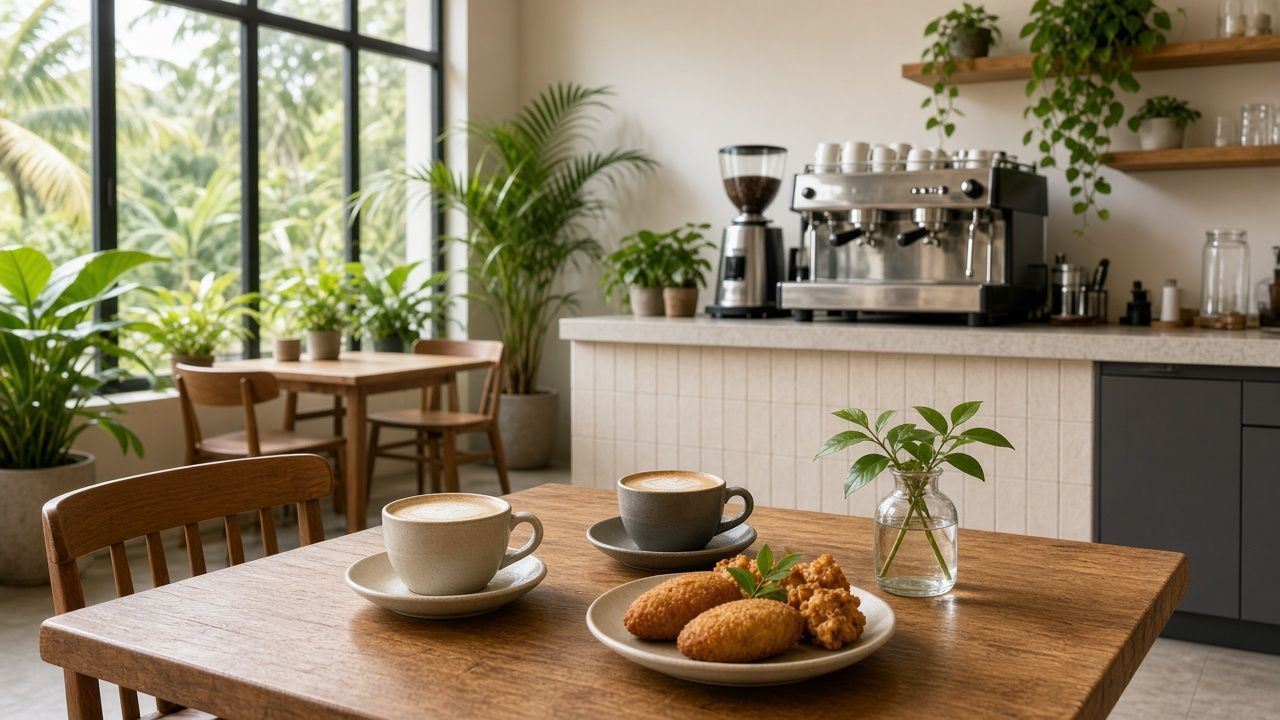
Step 1: Decide what kind of cafe you are opening
Before licences and loans, get clear on the format. The format decides your space, your kitchen, your staff count and even which licence category you fall under.
- Takeaway counter or kiosk: a small counter near a college, bus stand or office area selling tea, coffee, juices and ready snacks. Low seating, fast billing, high volume.
- Small sit-down cafe: a few tables, a short menu of beverages, sandwiches, puffs, cakes and a couple of Kerala snacks like pazham pori or unniyappam. This is the most common starting point.
- Specialty or themed cafe: specialty coffee, desserts, a book corner or a workspace setup. Higher interior spend and a stronger brand, but customers stay longer, so table turnover is slower.
- Cafe with a cloud-kitchen arm: a dine-in space that also takes orders through food delivery apps. You will need separate packaging, a packing station and tight order tracking.
Walk around your chosen area at different times of the day. Count how many people pass by in the morning, at lunch and in the evening, note which cafes are full and what they charge for a coffee. This simple fieldwork tells you more than any online report.
How to start a cafe in Kerala: the licences you need
This is the part that worries most first-time owners. The list is manageable if you start early and keep your documents (ID proof, address proof, rent agreement or ownership papers, building plan or tax receipt, and passport photos) ready in one folder, both on paper and as scanned copies.
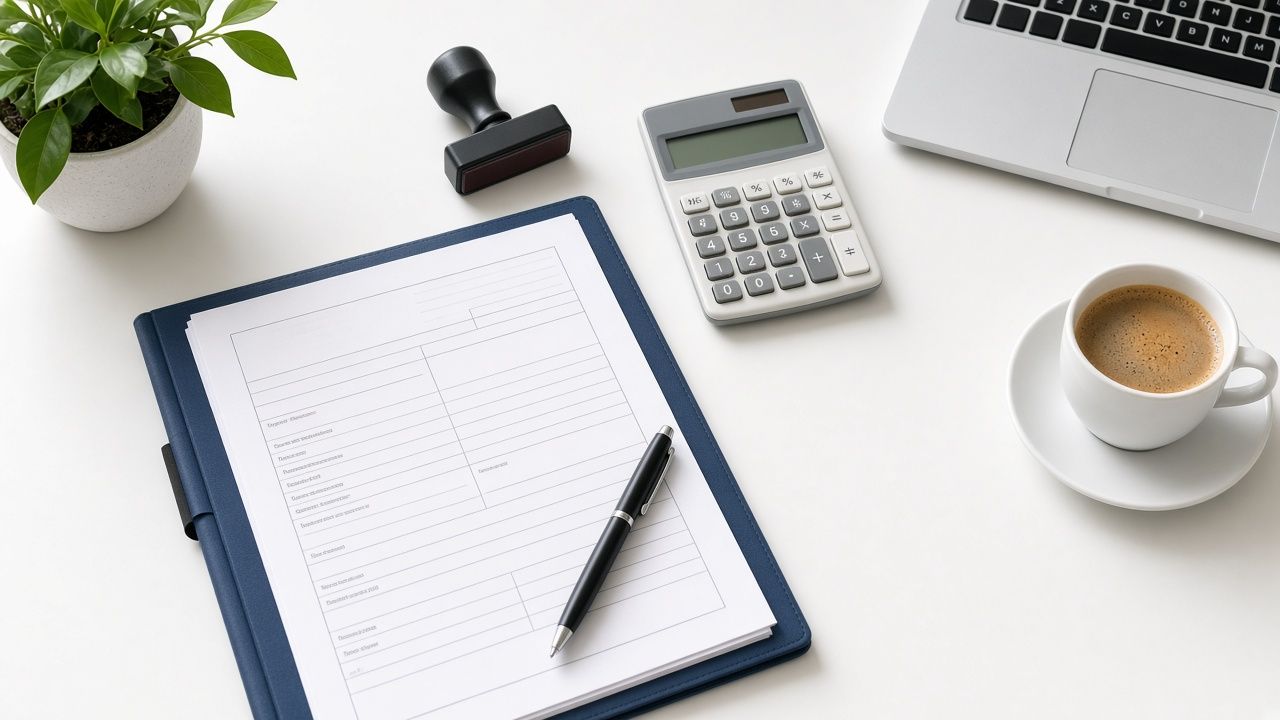
1. FSSAI registration or licence
Every food business in India must hold an FSSAI registration or licence under the Food Safety and Standards Act, 2006. For restaurants and cafes, the category depends on annual turnover. As per the eligibility list on the FSSAI FoSCoS portal, small businesses with turnover up to ₹12 lakh take a basic registration, and those above ₹12 lakh need a State licence (very large operations need a Central licence). You apply online on FoSCoS. If you expect to cross ₹12 lakh soon after opening, ask the Food Safety officer whether you should apply for the State licence directly.
2. Health cards for food handlers
Kerala has made health cards mandatory for food handlers in hotels, restaurants, cafes and other food businesses. Each staff member who handles food needs a medical certificate after a physical examination, blood tests and typhoid vaccination, and it has to be renewed every year. Keep the certificates at the cafe, because Food Safety officials check them during inspections and missing cards can lead to action against your licence.
3. Trade licence from the local body
You also need a licence to run a trade from your grama panchayat, municipality or corporation. Many people still call it the D&O licence. The local body will check that the building is approved for commercial use, so make sure your landlord has the building permit and property tax receipts before you sign. Apply online where your local body offers it, or at the front office.
4. Shops and Establishments registration
A cafe with employees must register under the Kerala Shops and Commercial Establishments Act with the Labour Department. This covers working hours, holidays and staff records. Even if you start with family members, it is easier to register at the beginning than to fix it during an inspection.
5. GST registration
Restaurant and cafe sales are treated as a supply of service under GST. Registration becomes compulsory once your turnover crosses the threshold for your state, and it is also needed if you want to sell through most food delivery apps. You can register on the GST portal with your PAN, Aadhaar, address proof and bank details. The rate you charge depends on the type of outlet, so confirm it with your accountant or on CBIC before you print your first bill. Our guide to billing software for small business in India explains what a GST-ready bill should contain.
6. Other approvals that may apply
- Fire safety NOC: usually needed for larger premises or buildings above a certain height. Ask the fire and rescue station in your area.
- Pollution Control Board consent: some local bodies ask for this for food outlets with cooking and waste water. Check with the Kerala State Pollution Control Board office.
- Signboard permission: large hoardings or boards facing the road may need separate permission from the local body.
- Music licence: if you plan to play recorded music for customers, check copyright licensing requirements.
Planning your cafe budget
We are not going to quote rupee figures, because costs in a busy area of Kochi are very different from a small town in Palakkad, and prices change fast. Instead, build your own budget sheet with these heads and get two or three quotes for each one.
One-time setup costs
- Rent advance and deposit (in Kerala this can be several months of rent, so negotiate it early)
- Interiors: flooring, lighting, furniture, paint, signboard and a washroom if needed
- Kitchen equipment and counters
- Licences, registrations and professional fees
- Billing system: computer or tablet, receipt printer, cash drawer and software
- Opening stock of ingredients, cups, plates and packaging
- Launch marketing such as Instagram posts, flyers and a soft-opening offer
Monthly running costs
- Rent and electricity (espresso machines, fridges and air conditioning push the bill up)
- Staff salaries and food for staff
- Raw material purchases
- Gas, water and waste disposal
- Delivery app commissions, if you use them
- Maintenance and small repairs
Keep a working-capital reserve that can cover a few months of running costs. Most new cafes take time to build regular customers, and the reserve stops you from panicking and cutting quality in the first slow months.
Budget tiers to think about
A simple way to plan is to sketch three versions: a lean version (takeaway counter, second-hand equipment, minimal interiors), a standard version (10 to 20 seats, new core equipment, modest interiors) and a premium version (designed interiors, specialty coffee setup). Price each version honestly and pick the one you can fund without borrowing beyond your comfort level.
How to size your cafe menu
New owners often start with a menu that is far too long. Every extra item means more ingredients, more wastage and slower service. A focused menu is easier to cook consistently and easier to cost.
- Start with a short list of beverages you can make really well, such as tea, filter coffee, a couple of espresso drinks, fresh juices and one or two seasonal specials.
- Add a small food list that shares ingredients. For example, the same bread, cheese and vegetables can make sandwiches, toast and burgers.
- Include local favourites. Kerala customers often pick a cafe for its evening snacks, so pazham pori, parippu vada or cutlets can bring in regular traffic.
- Cost every item before you fix the price. Our guide on how to calculate food cost percentage shows the formula step by step.
- Review sales after the first month and drop the items nobody orders.
Equipment and kitchen setup
Your equipment list depends on your menu, which is another reason to fix the menu first. For a typical small cafe, plan for:
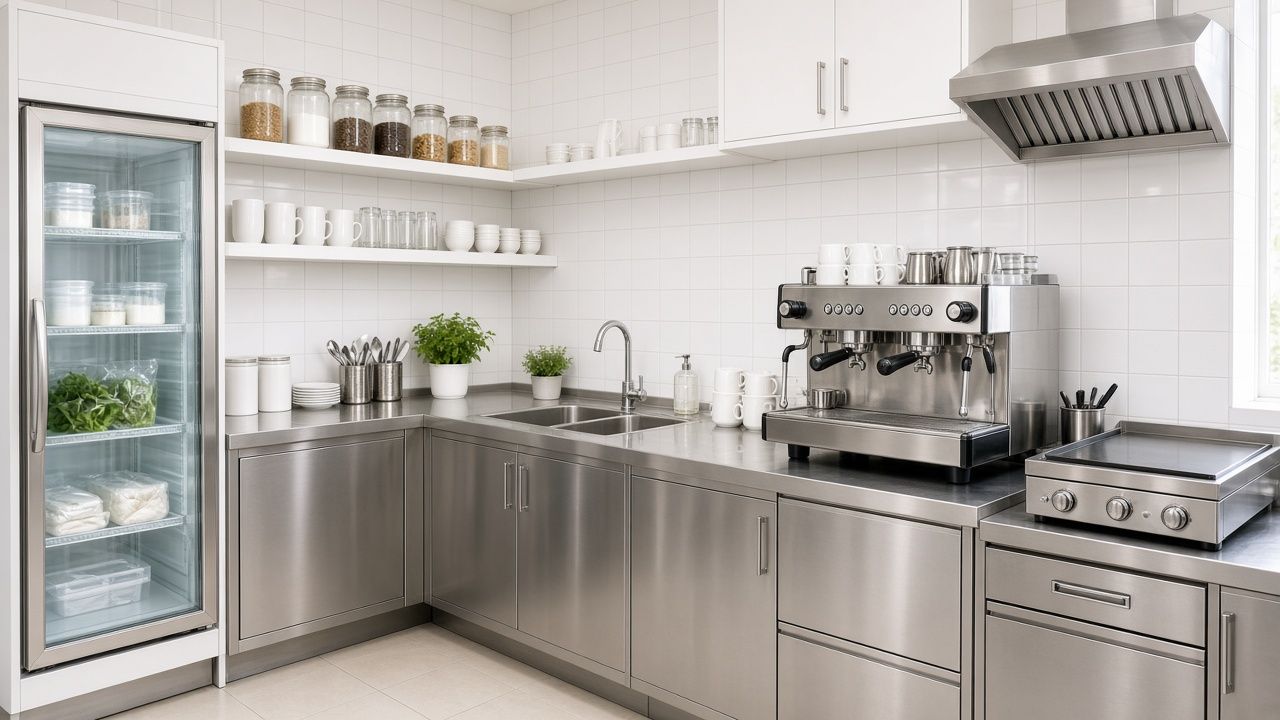
- Coffee machine or filter coffee setup, grinder and milk frothing equipment
- Refrigerator, freezer and a display chiller for cakes and drinks
- Griddle, sandwich maker, fryer or oven depending on the food menu
- Stainless steel work tables, sink with proper drainage and storage racks
- Water purifier and a hand-wash station for staff
- Exhaust hood or chimney to keep the dining area free of smoke
- Labelled storage containers for dry ingredients
Plan the kitchen layout so that raw material moves in one direction: storage, preparation, cooking, then the pickup counter. This saves steps during rush hours and helps you meet the hygiene expectations Food Safety officials look for.
Setting up billing and POS from day one
Many small cafes start with a handwritten bill book and switch later. That usually means months of sales with no clear data on which items sell, how much stock is used and where money is leaking. Setting up a proper billing system from the opening day avoids that.
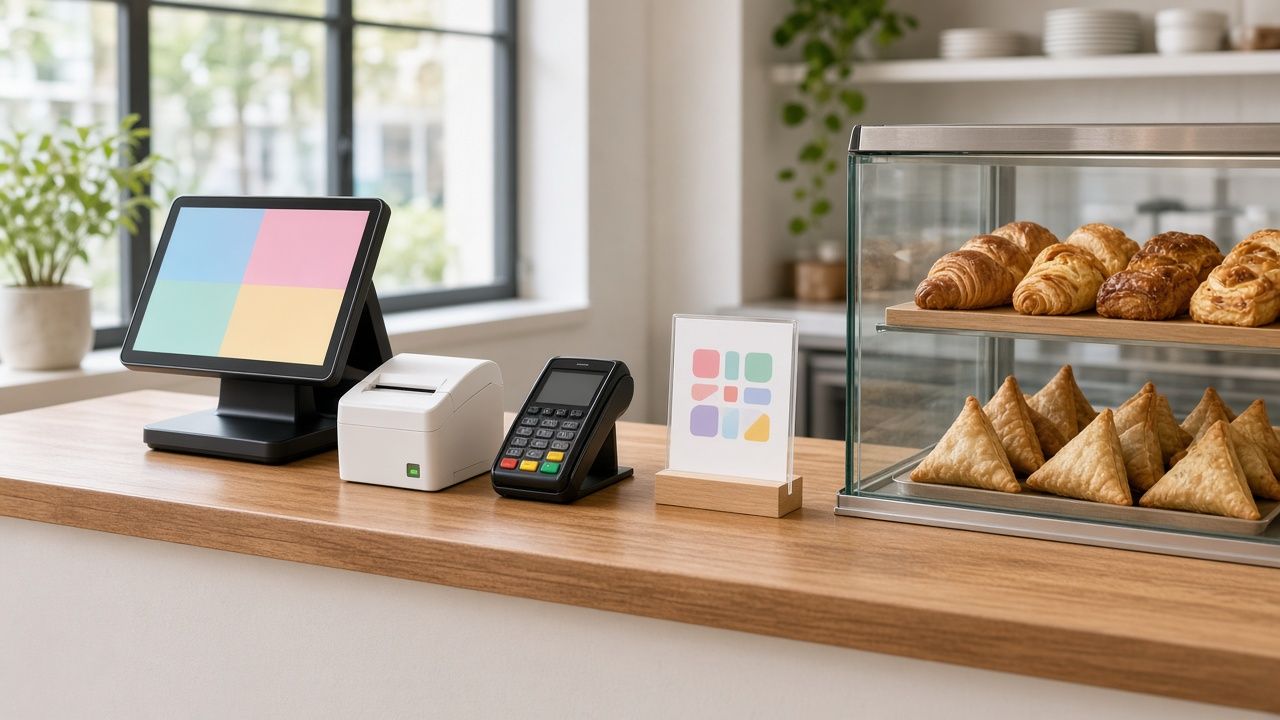
When you compare options, look for:
- Fast counter billing with item shortcuts, so a coffee and a snack can be billed in a few taps.
- GST-compliant bills with your GSTIN, HSN or SAC codes and tax breakup, if you are registered.
- KOT printing for sit-down orders, so the kitchen gets a clear ticket for each table. If KOT is new to you, read what a KOT is in a restaurant.
- Table management and split bills for groups of friends who want to pay separately.
- UPI, card and cash payment recording, so your daily closing matches the bank.
- Inventory with low-stock alerts for milk, coffee powder, sugar and packaging.
- Daily and item-wise sales reports that you can check from home.
Our detailed guide to cafe POS software covers these features in more depth. Before you buy anything, use the software demo checklist to test it with your own menu.
A simple opening timeline
- Weeks 1 to 2: finalise the location, check the building papers and sign the rent agreement.
- Weeks 2 to 4: apply for FSSAI, the local body trade licence, Shops and Establishments registration and GST.
- Weeks 3 to 6: complete interiors, install equipment and get health cards for your staff.
- Week 6: set up billing, enter your menu and prices, and train staff on billing and KOT.
- Week 7: run a soft opening for friends and neighbours, fix problems, then launch.
Your timeline may be shorter or longer depending on how quickly your local body processes applications, so start the licence work as early as possible.
Common mistakes to avoid
- Signing a lease before checking that the building can get a commercial trade licence.
- Spending most of the budget on interiors and leaving nothing for working capital.
- Launching with a long menu that the kitchen cannot handle at peak time.
- Not tracking daily sales and stock, so losses go unnoticed for months.
- Letting staff health cards expire after the first year.
Frequently asked questions
Which licence is most important to start a cafe in Kerala?
All the mandatory ones matter, but FSSAI registration or licence and the local body trade licence are the two you cannot open without. Add staff health cards and GST registration as soon as they apply to you.
Can I start a cafe from a rented building?
Yes. Most cafes run from rented premises. Make sure the rent agreement is registered or at least properly stamped, and that the owner can give you the building permit and tax receipts the local body will ask for.
Do I need GST registration for a small cafe?
It becomes compulsory once your turnover crosses the threshold for your state, and many food delivery apps also ask for a GSTIN. Speak to an accountant about the right timing for your business.
How many items should a new cafe menu have?
There is no fixed rule, but a short menu that shares ingredients is easier to run. Start small, track what sells, and add items once your kitchen is comfortable.
Get your cafe counter ready with Caddayn Biller
Caddayn Biller gives cafes fast GST billing, KOT, table management, split bills, QR ordering, UPI, card and cash payments, and inventory with low-stock alerts, on both a Windows app and a web app. You can download Caddayn Biller and set up your menu before your opening day, so your very first bill is accurate.