
Knowing how to collect payment from customers on time is one of the most practical skills a shop or small business owner in India can build. Most shopkeepers do not lose money because customers refuse to pay. They lose it because nobody decided who gets credit, nobody reminded the customer at the right time, and the outstanding list lived in a notebook that only one person could read. This guide gives you a simple system: a written credit policy, a reminder routine, easy ways for customers to pay, a fair way to handle part-payments, and an ageing report that tells you whom to call first. It is written for kirana stores, supermarkets, hardware shops, pharmacies, wholesalers and distributors, but the steps work for any business that sells on credit.
Why collections slip in small businesses
Before fixing collections, it helps to see where the money actually gets stuck. In most Indian shops the same few patterns repeat:
- Credit is given by habit, not by rule. A regular customer asks for “next week”, the counter staff agrees, and nobody records a due date.
- Reminders depend on mood. The owner feels awkward asking, so follow-up happens only when cash is tight, by which time the bill is two or three months old.
- Paying is inconvenient. The customer is willing to pay but has to come to the shop, or does not have your UPI ID, or does not know the exact amount.
- Part-payments are not linked to bills. When a customer pays ₹2,000 against several bills, the balance becomes a matter of memory and argument.
- There is no priority list. Without an ageing view, you chase the friendly customer with a small balance and ignore the large one that is quietly getting older.
Each step below fixes one of these leaks. You do not need to do everything at once. Start with the credit policy and the reminder routine, and add the rest over a few weeks.
Step 1: Write a simple credit policy before you give credit
A credit policy sounds like something only large companies have, but for a small shop it can be half a page. Its job is to remove guesswork at the counter, so that you and your staff give the same answer to every customer.

What to include in your credit policy
- Who can buy on credit. For example: customers known to the shop for at least three months, institutions such as hostels, hotels and clinics with a named contact person, and retailers you supply regularly.
- Credit limit per customer. A fixed rupee limit, such as ₹5,000 for a household and a higher amount for a business customer, based on how much they usually buy in a month.
- Credit period. The number of days before payment is due: for example, monthly settlement by the 5th for households, or 15 or 30 days from the invoice date for business customers.
- What happens when the limit or period is crossed. For example, new purchases are cash or UPI only until the old balance is cleared.
- Who can approve exceptions. Only the owner or the manager, never the counter staff alone.
Tell the customer the terms at the start
The policy only works if the customer knows it. When you open a credit account, say the limit and the due date clearly, and print the due date on every credit bill. A customer who hears “please clear it by the 5th of next month” is far easier to remind later than one who heard “pay whenever”.
If you sell to registered businesses, also remember that buyers who are Micro or Small enterprises registered under Udyam have legal protection against delayed payment. If you are the Udyam-registered supplier, your buyer is expected to pay within the agreed period, and that period cannot exceed 45 days under the MSMED Act. You can read more on the government’s MSME Samadhaan portal. Take professional advice before relying on this for any specific case.
Step 2: Set a reminder cadence and stick to it
The single biggest improvement most shops can make is to remind customers on a fixed schedule instead of when they remember. A polite, predictable routine feels professional, not rude. Here is a cadence that works for most retail and wholesale businesses:
- On the bill: the due date and the total outstanding printed clearly.
- 2 to 3 days before the due date: a friendly heads-up with the amount and a payment link or UPI details.
- On the due date: a short reminder: “Your balance of ₹X is due today.”
- 7 days after the due date: a firmer reminder with the bill numbers and dates attached.
- 15 to 30 days after the due date: a phone call from the owner, and new credit paused until the account is settled.
WhatsApp and SMS are the most common channels in India. If you want ready wording for each stage, see our payment reminder message templates for WhatsApp. Whatever channel you use, keep a short note of each reminder sent, so you know whether the customer is being chased for the first time or the fifth.
Keep the tone respectful
Most late payers are not trying to cheat you. They are busy, short of cash for a few days, or simply forgot. A reminder that states the amount, the bill date and an easy way to pay, without blame, gets paid faster than an angry message. Save the firm tone for the phone call, and even then talk about the account, not the person.
Step 3: Make paying easy with UPI and payment links
A surprising share of late payments are simply inconvenient payments. If the customer has to visit the shop or ask for your account number, the payment gets postponed. Remove that friction:
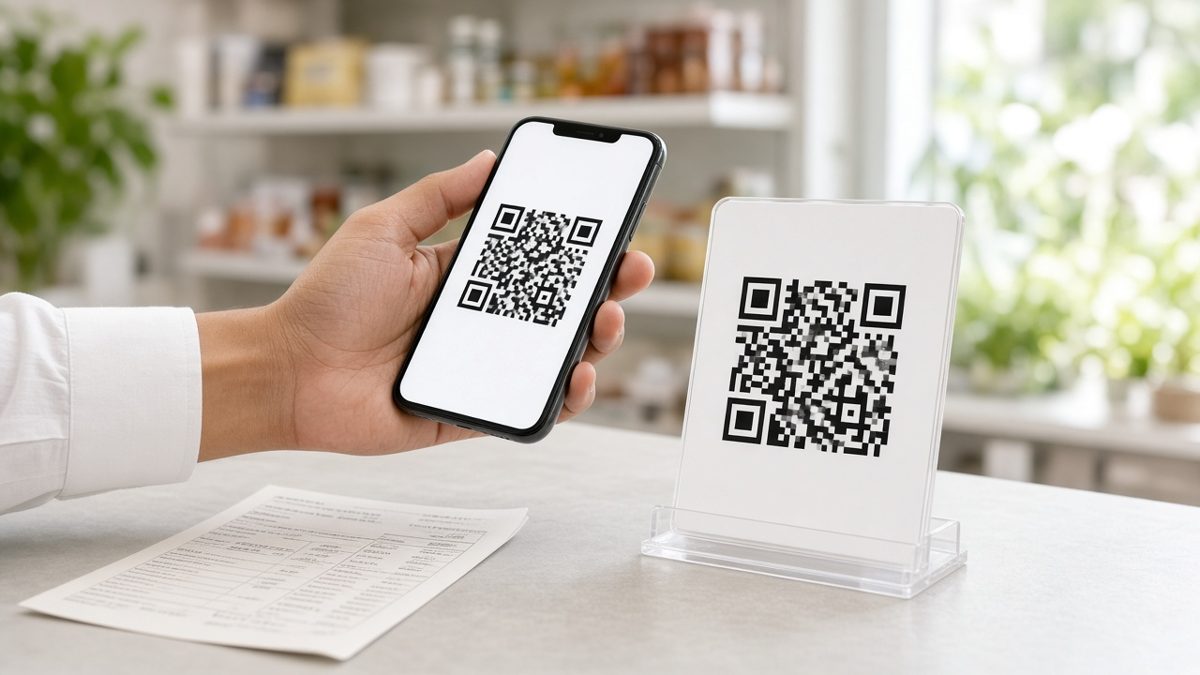
- Add your UPI ID or a payment link to every reminder. The customer can pay in one tap from the same message.
- Display a UPI QR code at the counter, and on credit bills if your bill format allows it.
- Accept card and cash as well, so that older customers or institutions with their own payment process are not stuck.
- Quote the exact outstanding amount, not a rough figure. “₹3,460 for bills dated 2 and 9 October” gets paid faster than “around three thousand”.
- Ask the customer to mention the bill number or their name in the UPI remark, so the receipt is easy to match.
UPI is run by the National Payments Corporation of India, and you can check how it works for merchants on the NPCI UPI overview. For how to link UPI receipts to invoices inside your billing system, read our guide on UPI payment billing software for shops.
Confirm every payment the same day
When the money arrives, send a short thank-you with the remaining balance, if any. It closes the loop, prevents disputes later, and quietly reminds the customer that you keep clean records.
Step 4: Handle partial payments without confusion
Customers often pay part of what they owe. That is fine, as long as you record it properly. The rule most businesses follow is to adjust a part-payment against the oldest bill first, unless the customer clearly asks for a specific bill to be cleared.
Here is an illustrative example (made-up numbers) from a grocery shop in Thrissur. A hotel customer has three unpaid bills:
- Bill dated 3 September: ₹6,200
- Bill dated 18 September: ₹4,800
- Bill dated 6 October: ₹5,500
The total outstanding is ₹16,500. The hotel sends ₹8,000 by UPI. Adjusted oldest-first, the 3 September bill (₹6,200) is fully cleared, and ₹1,800 goes against the 18 September bill, leaving ₹3,000 on it. The new outstanding is ₹3,000 + ₹5,500 = ₹8,500. Your reminder now says: “Thank you for ₹8,000. Balance ₹8,500: ₹3,000 on the bill of 18 September and ₹5,500 on the bill of 6 October.”
Notice what this does. The oldest bill, which was the most at risk, is gone. The customer sees exactly what is left. Nobody has to argue about which bill was paid.
Partial payment habits that help
- Never round off or “forgive” a balance at the counter without the owner’s approval.
- For large balances, agree an instalment plan in writing, with dates, and remind on each date.
- If a customer pays by cheque, record the cheque number and only treat the bill as paid after the cheque clears.
Step 5: Use an ageing report to decide whom to call first
An ageing report groups each customer’s outstanding amount by how old it is, usually in buckets such as 0 to 30 days, 31 to 60 days, 61 to 90 days and over 90 days. It is the most useful tool for anyone learning how to collect payment from customers in a disciplined way, because it tells you where your effort will recover the most money.
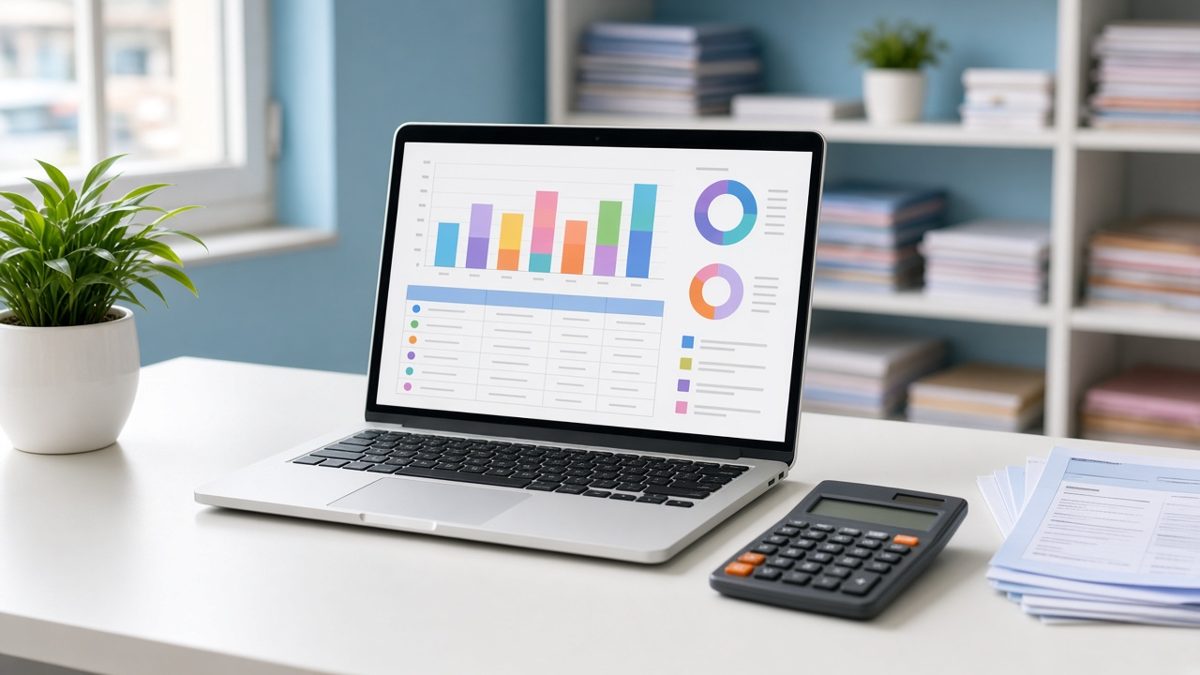
Read it like this:
- 0 to 30 days: normal. Routine reminders only.
- 31 to 60 days: needs attention. Send the firm reminder and pause new credit for that customer.
- 61 to 90 days: owner phone call this week. Agree a date or an instalment plan.
- Over 90 days: high risk. Meet the customer if possible, and consider whether formal steps are needed.
Sort the report by the largest amounts in the oldest buckets and work from the top. A ₹40,000 balance that is 75 days old deserves your Monday morning far more than ten small balances that are a week old. Review the report every week, and watch whether the older buckets are shrinking month after month. That trend is the real measure of whether your collection system works. For the wider process of moving dues from a notebook into software, see our article on customer dues management for retail.
A weekly collection routine for shop owners
Put the steps together into one fixed slot in your week, for example every Monday at 11 am, after the morning rush:
- Open the outstanding and ageing report.
- Send due-date and overdue reminders for the week, with UPI details.
- Call the top five oldest or largest balances yourself.
- Record every payment received last week against the right bills, oldest first.
- Pause credit for customers who have crossed their limit or period, and inform the counter staff.
- Note any promises (“will pay on Friday”) and set a reminder for that date.
Thirty minutes a week, done consistently, usually does more for cash flow than any single tough conversation.
When a customer still does not pay
Occasionally a balance will not move despite reminders and calls. Before writing it off, try a direct meeting, offer a short instalment plan, and stop all further credit. For business customers, a formal written demand often gets attention. If a cheque given to you bounces, there are specific legal remedies under the Negotiable Instruments Act, but they have strict time limits, so speak to a lawyer promptly. Udyam-registered micro and small suppliers can also file delayed-payment cases on the MSME Samadhaan portal mentioned above. Keep your bills, delivery records and reminder history organised, because they are your evidence in any of these steps. This article is general guidance, not legal advice.
How billing software makes collection easier
All of this is possible with a notebook, but it is much easier when your bills, customers and payments live in one system. Caddayn Biller keeps customer records with each bill, accepts UPI, card and cash payments, and works as both a Windows app and a web app, so you can see a customer’s bills and payments from the counter or the office. If you are still running credit from a paper khata, you can download Caddayn Biller and set up your regular credit customers first. You may also find our guide to pay-later billing software in India useful when comparing options.
Frequently asked questions
How do I ask a customer for payment politely?
State the amount, the bill date and an easy way to pay, and thank them for their business. For example: “Hello, a gentle reminder that ₹2,350 for your bill of 12 October is due today. You can pay by UPI to [your UPI ID]. Thank you.” Avoid blame and keep the tone the same for every customer.
How often should I send payment reminders?
A practical cadence is a few days before the due date, on the due date, a week after, and then a phone call at 15 to 30 days overdue. Being predictable matters more than being frequent.
Should I stop giving credit to late payers?
Pausing new credit until the old balance is cleared is fair and common. Put it in your credit policy so that it is a rule, not a personal decision, and tell the customer politely when it applies.
How should I record a partial payment?
Adjust it against the oldest unpaid bill first unless the customer asks otherwise, and send them the remaining balance bill by bill. This keeps the oldest, riskiest debts shrinking.
What is an ageing report and why does it matter?
It groups outstanding amounts by age, such as 0–30, 31–60, 61–90 and over 90 days. It shows which balances are most at risk so you can spend your collection time where it recovers the most money.