
If you are planning how to start a grocery store in India, the decisions that matter most are not the shelves or the signboard. They are the format you choose, the licences you file in the right order, the first stock you buy, the credit you get from suppliers and the way you bill from day one. This guide walks through each of those steps for a small-format grocery or kirana-style shop, with checklists that work whether you are opening in Kerala, Maharashtra or Delhi.
How to start a grocery store in India: the steps at a glance
Doing things in the wrong order means paying rent on an empty shop while you wait for a licence. A cleaner order is:
- Pick your format and budget tier.
- Shortlist the location and check footfall at different times of day.
- Set up the business structure, PAN and current account.
- Apply for the local and food licences, and GST if it applies to you.
- Line up suppliers and agree credit terms.
- Plan and buy the opening stock.
- Fix your pricing rules.
- Set up billing, payments and stock records before the first customer walks in.
If you are opening a larger self-service store in Kerala, our separate guide on how to start a supermarket business in Kerala goes deeper into the state-specific licences and layout.
Step 1: Choose your format and budget tier
Every grocery store fits roughly into one of three formats. Your format decides the space you need, how many people you hire and how much money gets locked up in stock.
Tier 1: Counter-service kirana
The customer asks, the staff picks the item from behind the counter. This works in a small room, needs one or two people and the lowest opening stock. Impulse sales are lower because customers cannot browse.
Tier 2: Self-service mini-mart
Open racks, baskets and a single billing counter. You need more floor space, more packaged goods (because customers pick them themselves) and barcode billing to keep the queue moving.
Tier 3: Small supermarket
Several aisles, two or more counters, a fruits and vegetables section and often home delivery. This tier needs proper stock control, staff roles and more working capital.
Whatever tier you pick, write a budget under these heads before signing a lease: rent deposit and advance, interior and racks, refrigeration, billing hardware and software, opening stock, licences and professional fees, signboard, and at least three months of running costs (rent, salaries, power). The last head is the one most people skip.
Step 2: Location checks that actually predict sales
Grocery is a habit purchase, so you want people who live or work nearby, not just heavy passing traffic. Before you commit:
- Stand near the shop at 8 am, 1 pm and 7 pm on a weekday and on a Sunday. Count how many people walk past carrying bags.
- Note every grocery, kirana and supermarket within a short radius, and what each one is known for.
- Check that two-wheelers can stop briefly outside.
- Look for a gap you can fill: late hours, home delivery, fresh vegetables, loose spices or a better range of a regional staple.
Step 3: Registrations and licences
The exact names and portals differ by state, so confirm with your local body or a consultant. The usual list for a grocery store is:
- Business structure and bank account: sole proprietorship is the most common start. You need a PAN and a current account in the shop’s name.
- Trade licence: issued by the municipality, corporation or panchayat where the shop is located.
- Shops and Establishments registration: under your state’s Shops and Establishments Act. Many states now do this online.
- FSSAI registration or licence: every food business needs one. Small grocers usually need Basic Registration, and larger turnovers need a State or Central licence. Check the current turnover slabs and apply on the FSSAI FoSCoS portal.
- GST registration: needed once your turnover crosses the threshold for your state, or earlier in some situations such as inter-state supply. You can check the rules and apply on the GST portal.
- Legal Metrology: any weighing scale used for selling must be verified and stamped by the state Legal Metrology department. If you repack loose goods into sealed packets, check whether packer registration applies.
- Udyam registration: optional, useful for MSME benefits.
Apply for the FSSAI registration and trade licence as soon as the rent agreement is signed, because those are usually the slowest.
Step 4: Suppliers and credit terms
Your supplier mix decides both your margin and your cash flow. A new grocery store usually buys from three kinds of sources:
Company distributors
Distributors for FMCG brands deliver to your shop, take orders through a salesman and often offer schemes (free goods, display incentives). New shops usually start with them on cash or very short credit.
Local wholesalers and mandis
For rice, pulses, sugar, oil, spices and loose items, a local wholesaler is usually cheaper and more flexible on quantity. Compare at least two and check weights on delivery.
Cash-and-carry wholesale stores
Useful for filling gaps in the first weeks. You pay upfront, so do not depend on them for your main range.
How to earn credit as a new shop
- Pay the first few bills on time or early. Distributors notice.
- Keep every purchase bill and record it the same day, with the due date.
- Never take more credit than you can repay from about one cycle of sales. Supplier credit that rolls over every month becomes a hidden loan.
Step 5: Plan the opening stock mix
New owners tend to buy too many brands and too few of the items that actually sell. A safer approach is to go narrow and deep: stock the everyday basics in good quantity and add variety only after you see what your customers ask for.
Category checklist
- Staples: rice (the varieties your area eats), atta, dal, sugar, salt, cooking oil, tea, coffee.
- Spices and masalas: whole and powdered, both loose and packed.
- Packaged foods: biscuits, snacks, noodles, breakfast items, ready-to-cook mixes.
- Dairy and bakery: milk, curd, butter, bread. Low margin, but they bring customers in daily.
- Personal care and household: soap, toothpaste, detergent, dishwash, matchboxes.
- Fruits and vegetables: optional at the start. They need daily buying and you will waste some stock.
Rules that keep money from getting stuck
- Start with two or three brands per category: the market leader, one value brand and one regional favourite.
- Stock popular small pack sizes. In many neighbourhoods, sachets and small packs sell faster than family packs.
- Keep a “customer asked for” notebook or list in your billing software for the first month. It is your best guide for the second purchase order.
Illustrative example (made-up): a new counter-service shop in a residential area of Kozhikode buys one brand of matta rice in bulk, two brands of coconut oil in 500 ml and 1 litre, and no imported snacks at all. Within three weeks the “asked for” list shows demand for puttu podi and small detergent packs, so those go into the next order, while two slow biscuit brands are dropped.
Step 6: Set your pricing rules
In India, packaged goods carry an MRP, and you cannot sell above it. Your pricing choices are mostly about how far below MRP you go and how you price loose items.
- Staples: customers compare prices on rice, oil and sugar, so keep these competitive even if the margin is thin.
- Packaged goods: selling at MRP is normal for most items. Use small discounts on a few visible items rather than across the board.
- Loose goods: price per kg from your landed cost (purchase price plus transport, packing and wastage), then add your margin. Recalculate when the purchase price changes.
- Margin by category: know which categories carry the margin and which only bring footfall. Our article on kirana store profit margin explains how to calculate this for your own shop.
Step 7: The minimum tech you need on day one
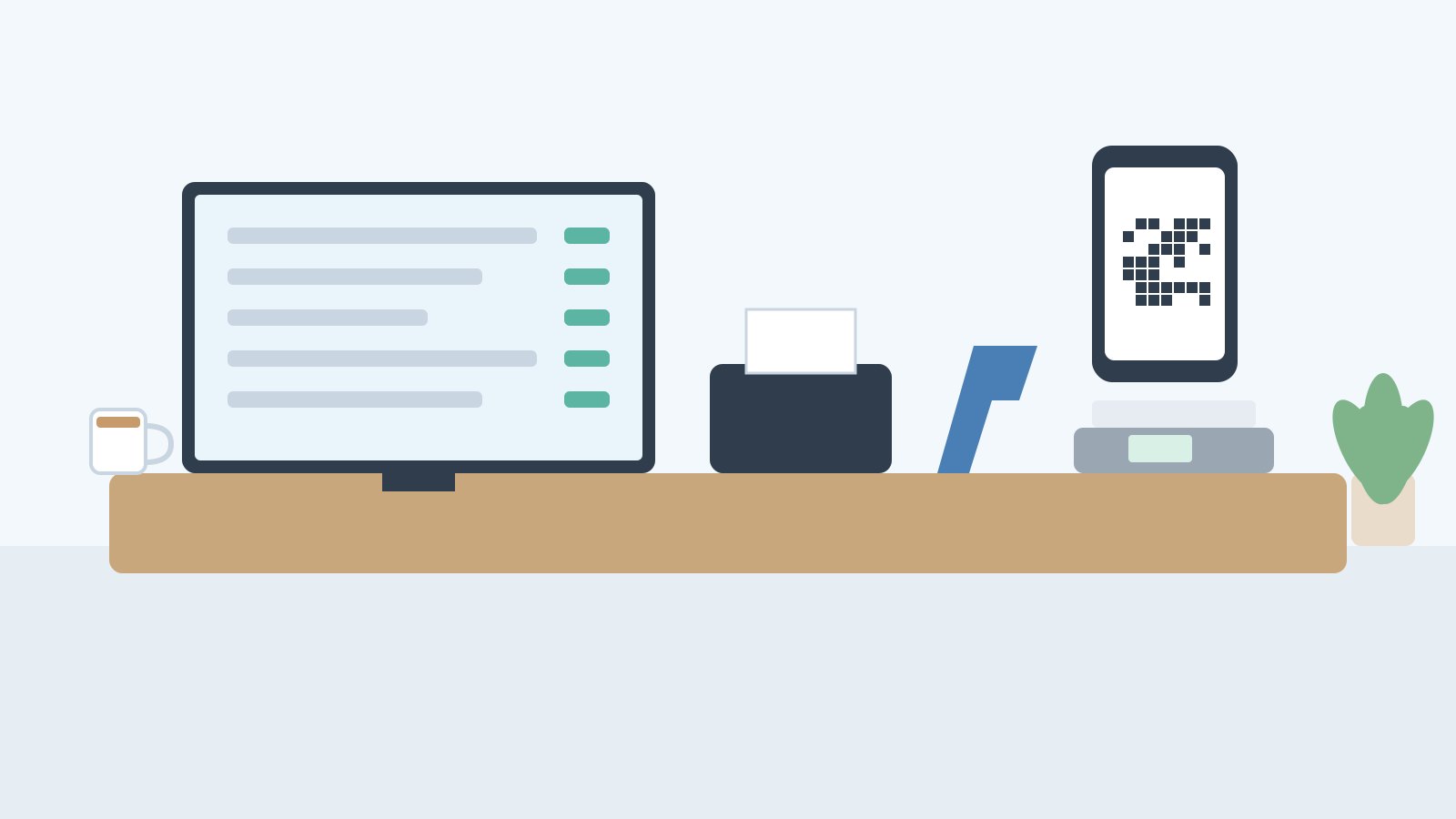
A notebook cannot tell you what sold, what is running out or what you owe suppliers. The minimum setup is:
- Billing software that prints GST-compliant bills (or a bill of supply if you are not registered or are under composition), tracks stock and handles loose items by weight.
- A barcode scanner for packaged goods, which speeds up billing and reduces wrong rates.
- A thermal receipt printer and paper rolls.
- A stamped weighing scale for loose items.
- UPI QR and a card option, with every payment recorded against the bill so the day-end cash count matches.
Set up the software before opening
- Create the item master: name, category, unit (kg, piece, packet), barcode, HSN code and tax rate.
- Enter the opening stock with purchase cost so your profit reports are correct from day one.
- Set low-stock alerts for your fast-moving staples.
- Do a test day: bill a few items, take a UPI payment, print a receipt and run the day-end report.
For a small shop, look for software built for kirana counters. Our guides to kirana billing software in India and supermarket billing software list the features to check.
Run your new grocery store on Caddayn Biller
Caddayn Biller is built for Indian shop counters. It handles barcode and GST billing, inventory with low-stock and reorder alerts, units of measure for loose items, price lists, customer and loyalty records, and UPI, card and cash payments. It runs as a Windows app and a web app, so you can check sales from home. If you are setting up a new store, download Caddayn Biller and build your item master before opening day.
Frequently asked questions
Which licences do I need to start a grocery store in India?
Usually a trade licence from the local body, Shops and Establishments registration, FSSAI registration or licence, and Legal Metrology verification for weighing scales. GST registration is needed once you cross the threshold or fall into a compulsory category. Requirements vary by state, so confirm locally.
Is GST registration compulsory for a small grocery store?
Not always. It depends on your turnover and whether you make inter-state supplies, among other conditions. Check with your accountant before deciding on voluntary registration.
How do I decide how much opening stock to buy?
Start with the everyday basics in two or three brands each, in the pack sizes your area buys. Keep the first order smaller than you think you need, and track what customers ask for so the second order follows real demand.
Do I need billing software for a small kirana shop?
It is not legally required, but it helps you issue proper bills, track stock, record supplier dues and see which items make money.