
If you run a bakery in Kerala or anywhere in India, one question comes up at the billing counter every day: how much GST should go on a loaf of bread, a slice of plum cake, a packet of rusks or a box of puffs? This guide explains GST on bakery items as it stands after the rate changes that took effect on 22 September 2025, with an item-wise rate table, HSN codes, what changes when customers eat inside your shop, and how to set up tax classes in your billing software so every bill comes out right.
The short version is good news for bakers. Most bakery products now sit in just two buckets: nil-rated (bread and Indian breads) and 5% (cakes, pastries, biscuits, rusks, namkeen and sweets). The tricky parts are the items at the edges, the drinks in your cooler and the dine-in section of a bakery-cum-cafe.
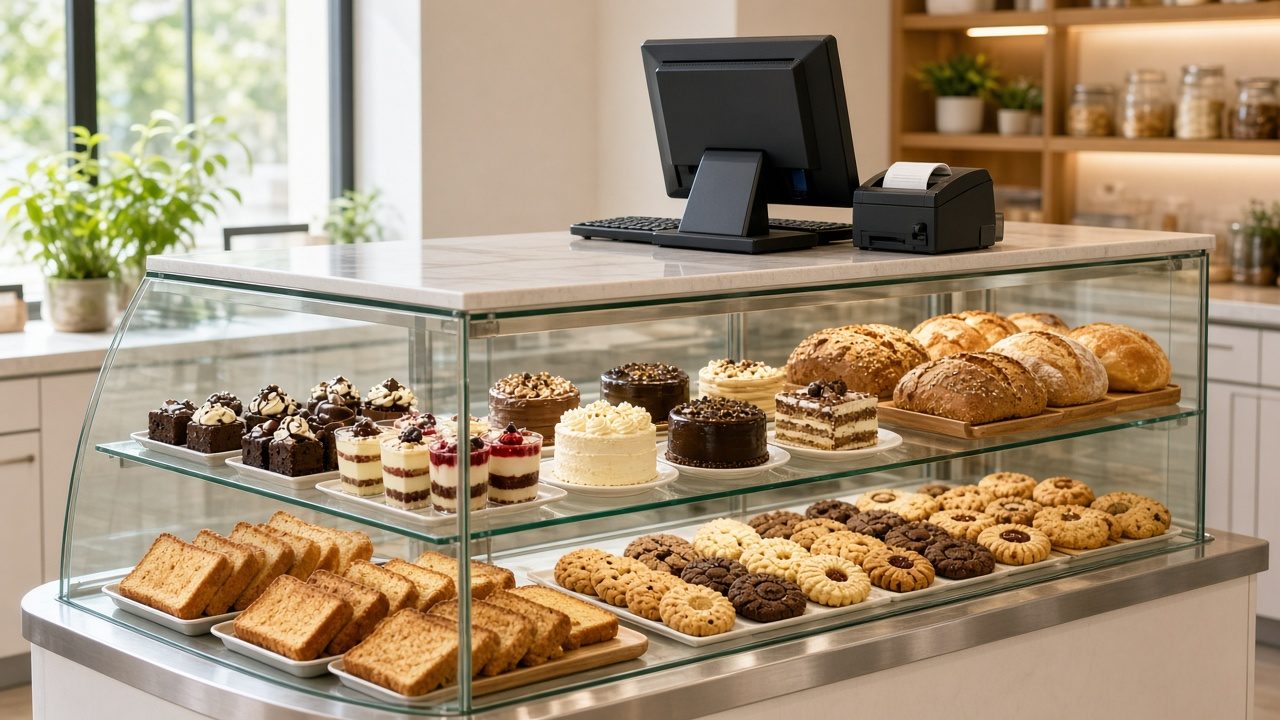
What changed for bakeries in September 2025
Before the rate revision, a typical bakery juggled four slabs. Bread was exempt, rusks were at 5%, namkeen was at 12% and cakes, pastries and biscuits were at 18%. A single bill could carry three different rates, and many small shops simply charged one rate on everything, which was wrong in both directions.
On the recommendation of the 56th GST Council meeting, the government moved most food items into the nil or 5% slabs from 22 September 2025. For bakeries, the important changes were:
- Pastry, cakes, biscuits and other bakers’ wares under HSN 1905 came down from 18% to 5%.
- Khakhra, plain chapati or roti, paratha, parotta and other Indian breads, as well as pizza bread, became nil-rated, joining ordinary bread.
- Namkeen, bhujia, mixture and similar ready-to-eat snacks moved to 5%, whether or not they are pre-packaged and labelled.
- Chocolates, sugar confectionery and ice cream, which many bakeries sell alongside their own products, moved to 5%.
You can read the government’s summary in the PIB factsheet on GST for the food processing sector, and check individual entries on the CBIC goods rate finder. Rates can change again through new notifications, so check them whenever the GST Council meets.
GST on bakery items: item-wise rate table with HSN codes
The table below covers the products you are most likely to sell from a neighbourhood bakery, a Kerala-style bakery with snacks and sweets, or a cake shop. The HSN code is shown at the four-digit heading level, which is what most small businesses print on their invoices. If your turnover requires six- or eight-digit codes, confirm the full code with your tax adviser.
| Bakery item | HSN heading | GST rate from 22 Sep 2025 |
|---|---|---|
| Bread, branded or not (sandwich bread, milk bread, brown bread) | 1905 | Nil |
| Pizza bread, khakhra | 1905 / 2106 | Nil |
| Chapati, roti, paratha, parotta and other Indian breads | 1905 / 2106 | Nil |
| Rusks, toasted bread and similar toasted products | 1905 40 00 | 5% |
| Cakes (fresh cream, plum, tea cake), pastries, muffins | 1905 | 5% |
| Biscuits, cookies, wafers | 1905 | 5% |
| Puffs, buns, croissants and other bakers’ wares | 1905 | 5% |
| Namkeen, mixture, bhujia and similar ready-to-eat snacks | 2106 90 | 5% |
| Indian sweets and sweetmeats (halwa, laddu, barfi) | 2106 90 | 5% |
| Chocolates and cocoa preparations | 1806 | 5% |
| Toffees and sugar confectionery | 1704 | 5% |
| Ice cream | 2105 | 5% |
| Cake premix and dough for bread or pastry | 1901 20 00 | 5% |
Fried snacks such as banana chips can fall under a different heading depending on how they are made, so do not assume they follow the namkeen entry. Ask your accountant to confirm the classification once, then save it in your item master so nobody at the counter has to guess.
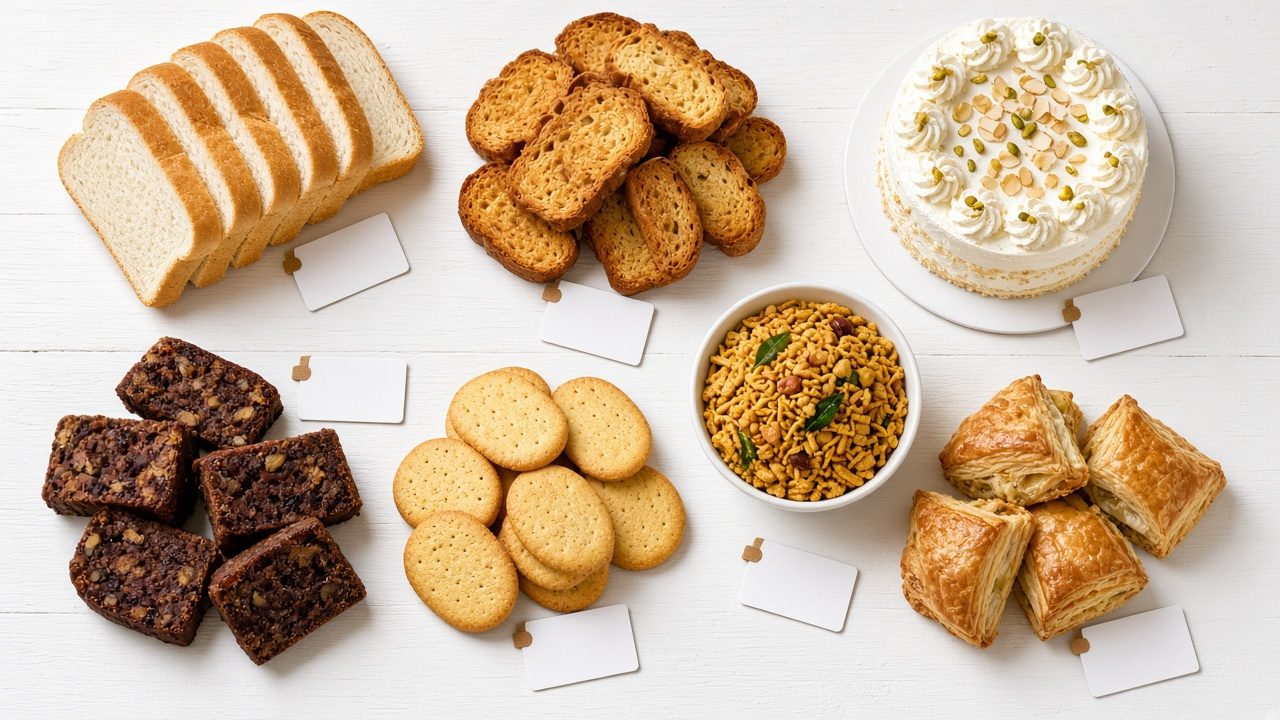
Does packaging change the rate?
Under the old structure, whether a product was pre-packaged and labelled could move it from one slab to another. For the bakery items in the table above, packaging no longer changes the GST rate: bread is nil whether loose or branded, and a biscuit is 5% whether it is sold from a glass jar or in a sealed pack. Packaging still matters for Legal Metrology rules, though. A pre-packed cake or cookie box needs the required label declarations, including MRP, and the MRP you print already includes GST.
Drinks and other counter items
Most bakeries also sell bottled water, juices and soft drinks from a cooler. These are not bakery items, and they do not all follow the 5% rule. Aerated drinks with added sugar, for example, were moved to the higher 40% slab in the same revision. Set up each drink with its own rate instead of copying the bakery tax class.
A worked example: one counter bill, three rates
Here is an illustrative bill from a bakery in Thrissur. The prices are made up for the example; they are not real prices from any shop. All prices are GST-inclusive, as they are on most bakery counters.
- One sandwich bread loaf at ₹45: nil-rated, so taxable value ₹45 and GST ₹0.
- One 500 g plum cake at ₹420: 5% included, so taxable value = 420 ÷ 1.05 = ₹400 and GST = ₹20 (CGST ₹10 and SGST ₹10).
- One cookie pack at an MRP of ₹60: 5% included, so taxable value = 60 ÷ 1.05 = ₹57.14 and GST = ₹2.86 (CGST ₹1.43 and SGST ₹1.43).
The customer pays ₹525. Your bill should show the nil-rated bread separately from the taxable items, and the GST summary at the bottom should show ₹22.86 of tax split into CGST and SGST. If you need a refresher on reverse-calculating tax from a GST-inclusive price, see how to calculate GST from the total amount.
Bakery-cum-cafe: what changes for dine-in
Many Kerala bakeries have a few tables where customers sit with tea and a puff or a slice of cake. Once you serve food for consumption on your premises, the supply starts to look like a restaurant service rather than a simple sale of goods. A standalone restaurant service is generally taxed at 5% without input tax credit (ITC), while a counter sale of cake is a supply of goods at 5% where ITC is available.
The rate on the bill may look the same, but there are two practical differences:
- Input tax credit. If part of your sales is treated as restaurant service at 5% without ITC, you cannot claim full credit on the GST you paid on inputs such as ovens, packaging and premixes used for that part.
- Nil-rated items. Bread or a parotta sold over the counter is nil-rated, but when it is served as part of a meal at your tables, it may become part of a taxable restaurant supply.
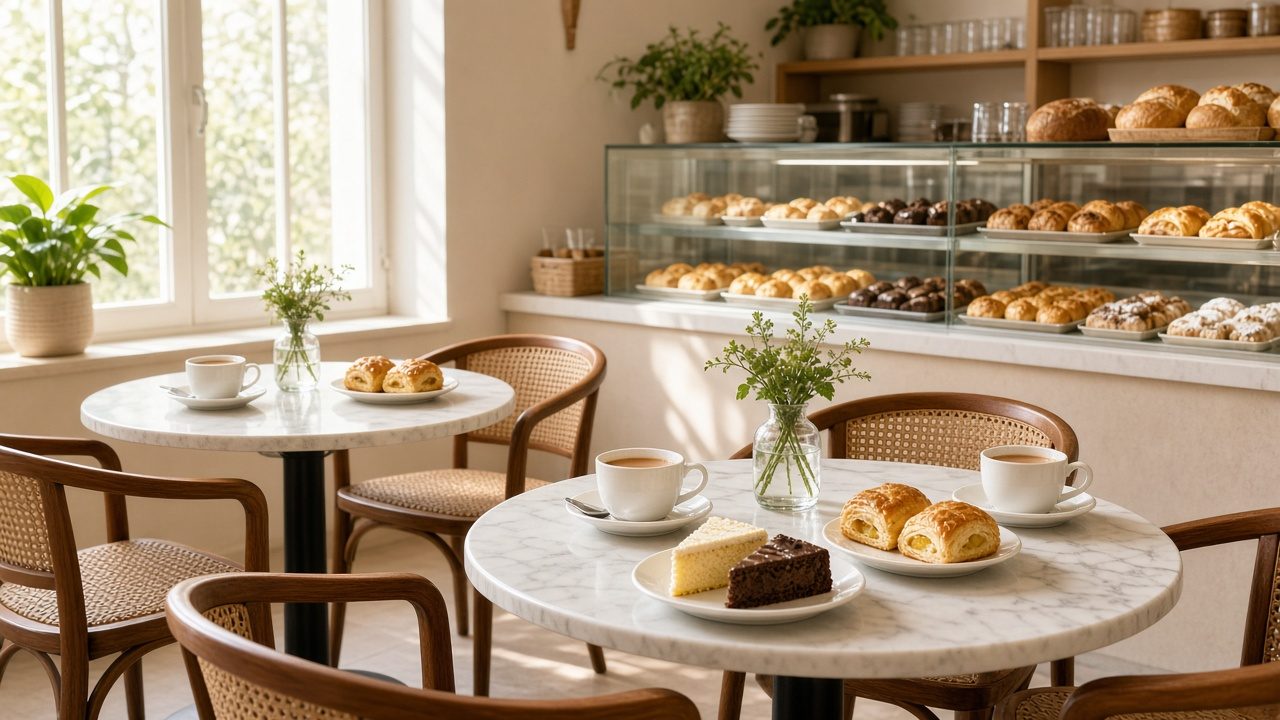
How the law treats a mixed bakery and cafe depends on how your business is set up and registered, and authorities have not always agreed on it. The safe approach is to keep takeaway and dine-in sales clearly separate in your billing, take written advice from your chartered accountant on which treatment applies to you, and follow that consistently. For hotel restaurants, food delivery apps and outdoor catering, read our guide on the GST rate on restaurant food.
Exempt bread and input tax credit
Because bread and Indian breads are nil-rated, a bakery that sells both bread and 5% items is making a mix of exempt and taxable supplies. GST rules say input tax credit on common inputs, such as flour, electricity-related purchases or packaging used for both kinds of products, has to be split, and the share that relates to exempt supplies cannot be claimed. A bakery that sells mostly bread will feel this more than a cake shop.
Your accountant will usually work out this reversal at return-filing time from your sales figures. Your job is to make sure your billing data shows nil-rated and taxable sales separately, item by item, so the split is accurate.
Composition scheme bakeries
Small bakeries with turnover within the composition limit may have opted for the composition scheme. If you are a composition dealer, you do not collect GST from customers item by item. You issue a bill of supply instead of a tax invoice and pay tax on your turnover at the composition rate. The item-wise rates in this guide still matter for your purchases and for the day you move out of the scheme. Our article on bill of supply vs tax invoice explains the difference.
How to set up tax classes in your billing software
Most billing mistakes in bakeries come from a messy item master, not from the counter staff. Spend one afternoon setting it up properly using the steps below:
- Create a small set of tax classes. For a typical bakery that means “Nil – bread and Indian breads”, “GST 5% – bakery and snacks”, “GST 18%” for any general goods you stock and a separate class for aerated drinks. Name them clearly so staff can pick the right one.
- Attach an HSN code to every item. Group items by heading (1905, 2106, 1806, 2105 and so on) and enter the code once in the item master. The HSN and SAC code guide for billing software shows how this works on invoices.
- Mark prices as tax-inclusive. Bakery counters usually display final prices. Set the item price as inclusive, so the software back-calculates the taxable value and the CGST and SGST split.
- Handle weighed items properly. Cakes, mixture and sweets sold by weight should use a kg or gram unit with a per-kg price, so the tax is calculated on the actual quantity sold.
- Separate dine-in and takeaway. If you have tables, bill them under a separate counter or order type so your accountant can see dine-in sales on their own.
- Review after every rate change. When a new rate notification is issued, update the tax class once rather than editing hundreds of items.
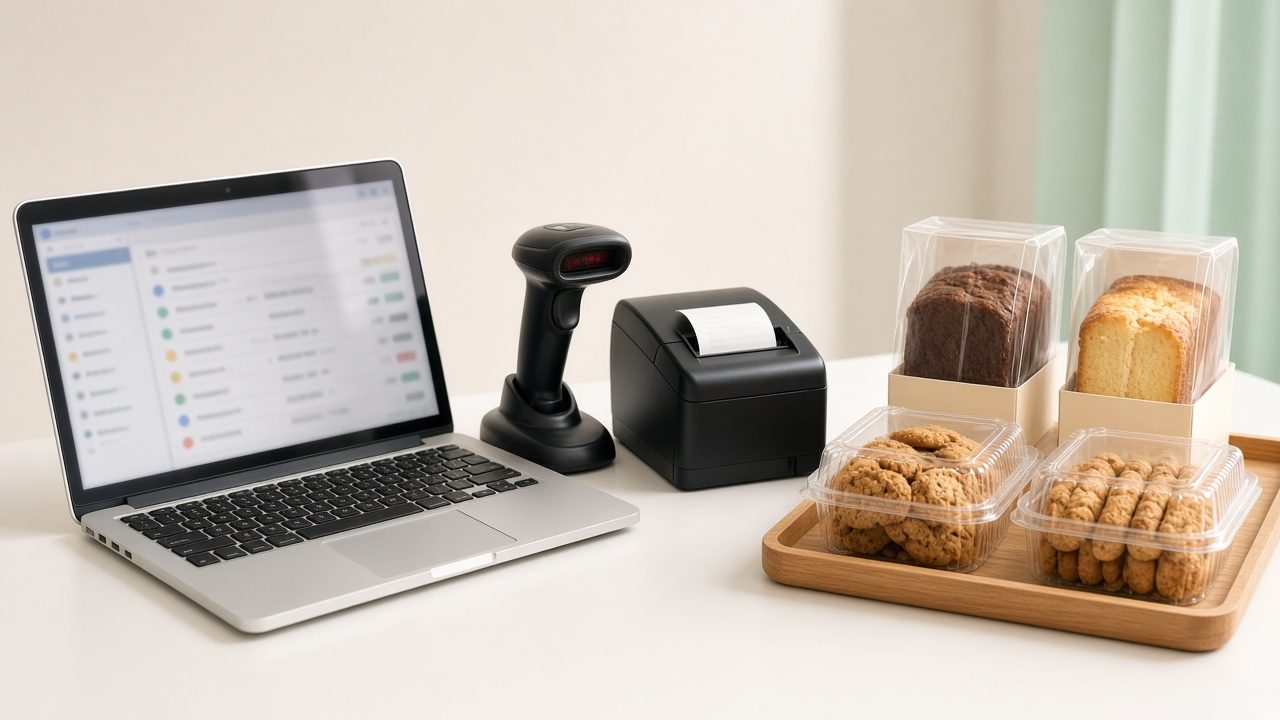
Once the item master is right, check one day’s GST summary report against a few printed bills. If the nil-rated, 5% and other totals match, your setup is working. For a broader look at choosing GST software, see our guide to GST billing software for retail shops in India and the checklist for GST invoice software for shops.
Common GST mistakes bakeries make
- Charging 18% on cakes and biscuits after September 2025. Old item masters and pre-printed rate charts still carry the earlier rate. Update them.
- Charging GST on bread. Bread is nil-rated whether it is branded or not. Collecting tax on it is wrong, even if you deposit the tax.
- Using one rate for the whole shop. Drinks, general goods and dine-in sales may follow different rules from your baked goods.
- No HSN codes on invoices. Business customers ordering cakes or snacks in bulk will ask for proper tax invoices with HSN codes and your GSTIN.
- Mixing exempt and taxable sales in reports. Without a clean split, your accountant cannot work out the correct input tax credit.
How Caddayn Biller helps bakeries
Caddayn Biller is billing software built for Indian shops, including bakeries. It supports GST billing with item-wise tax and HSN codes, barcode billing for packed items, units of measure for weighed cakes and snacks, and inventory with low-stock alerts for fast-moving products. Customers can pay by UPI, card or cash, and it runs as a Windows app or a web app. If you also run a cafe corner, the restaurant features (KOT, tables and split bills) help you keep dine-in orders separate from counter sales. You can read more about bakery billing software or download Caddayn Biller and set up your bakery’s tax classes today.
FAQ: GST on bakery items
What is the GST rate on cakes in India?
From 22 September 2025, cakes, pastries and other bakers’ wares under HSN 1905 are taxed at 5%, down from 18% earlier. The rate is the same for fresh cream cakes and packed plum cakes.
Is there GST on bread?
No. Bread, whether branded or not, is nil-rated. Pizza bread, khakhra, chapati, roti, paratha, parotta and other Indian breads are also nil-rated from 22 September 2025.
What is the GST rate on biscuits and rusks?
Both are taxed at 5%. Biscuits moved from 18% to 5% in the September 2025 revision, while rusks and toasted bread were already at 5%.
Do I charge GST separately or include it in the price?
Either is allowed, but most bakeries show GST-inclusive prices and the MRP on packed goods always includes tax. Your billing software should then back-calculate the taxable value and show the GST split on the bill.
Is GST on bakery items different for dine-in customers?
It can be. Food served for consumption at your tables may be treated as a restaurant service at 5% without input tax credit, and nil-rated items like bread may become part of a taxable supply. Keep dine-in and takeaway billing separate and confirm the treatment with your chartered accountant.
This article is general information based on GST rate notifications effective from 22 September 2025. It is not tax or legal advice. Confirm the classification of your specific products with a qualified tax professional.