
If you are planning how to start a medical shop in Kerala, the hard part is not finding a good location or a supplier. It is getting the retail drug licence right the first time, so the Drugs Inspector’s pre-licence visit goes smoothly and you can open on the date you planned. This guide walks you through the whole path in the order most new pharmacy owners actually face it: choosing the business structure, finding a registered pharmacist, preparing the premises, applying online through ONDLS, and setting up billing and stock from day one.
Rules and fees do change, so treat this as a practical checklist and always confirm the current requirements with the Kerala Drugs Control Department or your local Drugs Inspector before you spend money on fit-out.
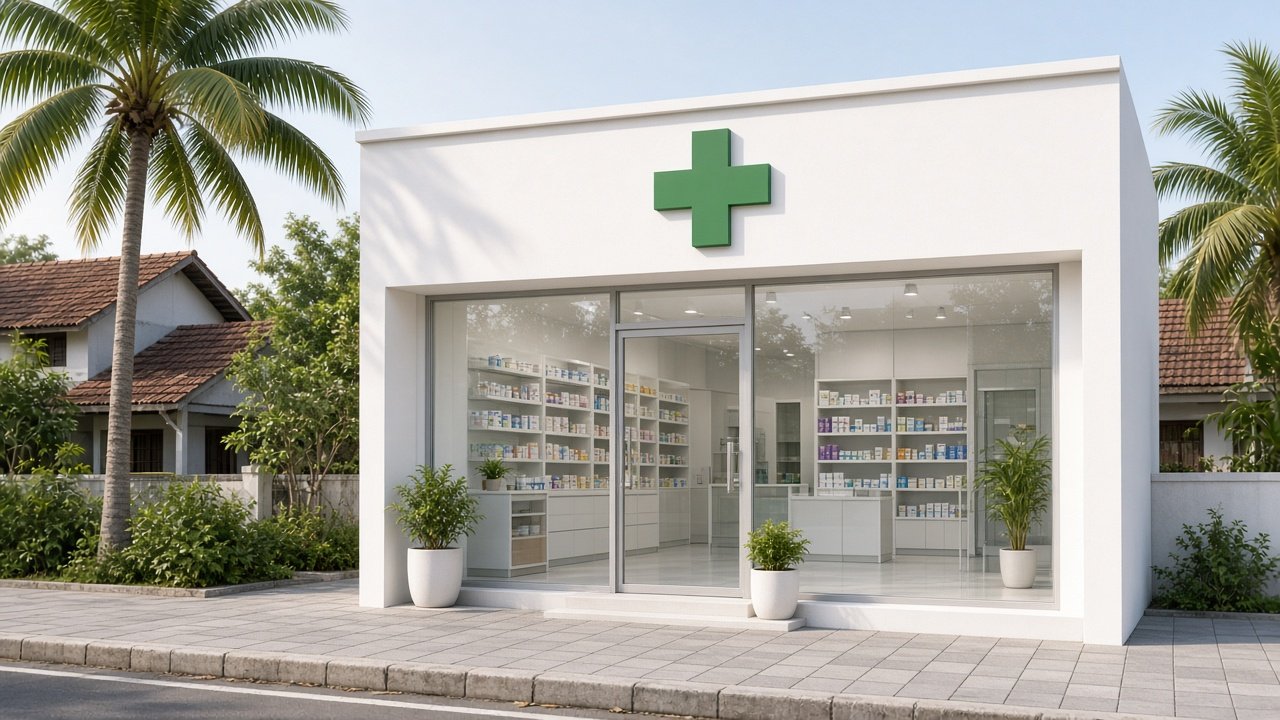
How to start a medical shop in Kerala: the big picture
A retail pharmacy (allopathic medicines) in Kerala is licensed under the Drugs and Cosmetics Act, 1940 and the Drugs Rules, 1945, enforced by the State Drugs Control Department. Since 2022, the department issues sale licences through the Online National Drugs Licensing System (ONDLS). In simple terms, the journey looks like this:
- Decide what you will sell and in what structure (proprietorship, partnership, LLP or company).
- Secure premises that meet the size and storage conditions.
- Engage a registered pharmacist who will be in charge of the counter.
- Apply online in Form 19 for a retail sale licence (issued as Form 20 and, for biological items, Form 21).
- Face the pre-licence inspection by the Drugs Inspector.
- Complete the other registrations: local body trade licence, shops and establishments registration, and GST.
- Set up purchase, stock and billing systems before the first supplier invoice arrives.
Retail, wholesale or both?
Most first-time owners start with a retail medical shop. Wholesale distribution to other pharmacies and clinics needs a separate wholesale licence (Form 19 wholesale, issued as Form 21) and usually a larger premises. If you plan to do both from one place, discuss it with the Drugs Inspector early, because the space and staffing expectations go up. Homoeopathic medicines and Schedule X drugs have their own forms on ONDLS, so list exactly what you intend to stock before you apply.
Step 1: Choose the structure and the pharmacist
The licence is issued in the name of the firm, so settle the legal structure first. A sole proprietorship is the quickest to set up. A partnership or LLP makes sense if two or three people are investing, for example a pharmacist and a business partner. Whatever you choose, keep the constitution documents ready (partnership deed, LLP agreement or incorporation papers), because attested copies are part of the application.
The registered pharmacist requirement
A regular retail drug licence needs a qualified person in charge, which in practice means a pharmacist registered with the Kerala State Pharmacy Council. The pharmacist’s registration certificate and a signed declaration that they will work at your premises are uploaded with the application. If you are a pharmacist yourself, you can be the person in charge. If not, agree the terms with your pharmacist in writing before you apply, including working hours, because the counter must not sell prescription medicines when no qualified person is present.
There is also a restricted licence (Form 19A) for dealers who do not engage a qualified person, but it covers only a limited list of products and is mainly relevant to general stores in areas without a pharmacy. For a real medical shop, plan for a pharmacist.

Step 2: Get the premises right
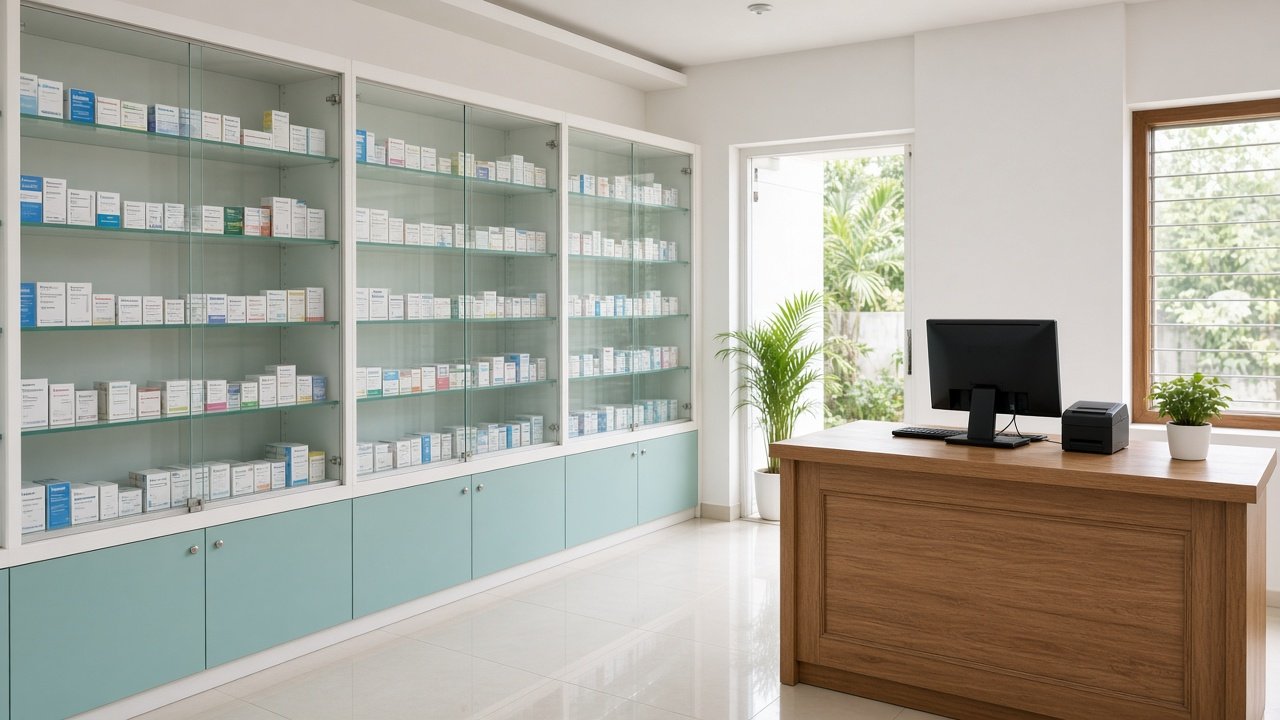
The pre-licence inspection is mostly about the premises, so this is where careful planning saves weeks. Points Drugs Inspectors commonly check include:
- Area: the Drugs Rules set a minimum area for a retail sale premises (commonly cited as 10 square metres for retail, and more if you combine retail and wholesale). Measure the usable floor area, not the plot.
- Ownership or rent proof: a document from the local authority showing ownership, or a registered rent agreement with the owner’s documents.
- Storage conditions: clean, dry, well-ventilated space with shelving that keeps medicines off the floor and away from direct sunlight.
- Cold storage: a refrigerator for vaccines, insulin and other items that must be stored cold, with a working thermometer you can show.
- Separate areas: a clearly marked place for expired, damaged or returned stock so it never mixes with saleable goods.
- Counter layout: a counter where the pharmacist can see prescriptions and dispense, with Schedule H and H1 medicines kept where customers cannot help themselves.
A tip from owners who have done this: finish the shelving, fridge and lighting before you submit the application. The inspection happens after document verification, and an incomplete shop is the most common reason for a second visit.
Step 3: Apply for the drug licence on ONDLS
Kerala moved retail and wholesale drug licensing to ONDLS (statedrugs.gov.in). The Kerala department’s standard operating procedure lists the documents and process for a retail licence. Expect to prepare:
- Online application in Form 19 (retail) on ONDLS, with the categories of drugs you will stock.
- Online payment receipt for the prescribed licence fee (check the current amount on the portal).
- Proof of ownership or tenancy of the premises from the local authority.
- Registration certificate of the pharmacist and the pharmacist’s declaration.
- An affidavit in the prescribed format.
- Attested copies of the firm’s constitution documents.
- Identity proof and photograph of the applicant, plus the department’s questionnaire.
- A covering letter and a site plan showing the shop layout and dimensions.
After e-submission, the concerned Drugs Inspector verifies the documents and visits the premises. Keep a printed set of the complete application ready for the inspection, because the SOP asks for a hard copy at that stage. Once the inspector recommends it, the licence is issued by the Assistant Drugs Controller, and you can track the status online. The SOP gives a target timeline of 28 days, but plan your opening date with some buffer.
Common reasons applications get delayed
- Rent agreement not registered or not matching the premises address in the application.
- Pharmacist’s registration not current, or the same pharmacist already shown at another shop.
- Site plan dimensions that do not match what the inspector measures.
- No refrigerator or thermometer at the time of inspection.
Step 4: Other registrations you will need
The drug licence is the main permission, but it is not the only one. Most medical shops in Kerala also need:
- Trade licence (D&O licence) from the panchayat, municipality or corporation where the shop is located.
- Registration under the Kerala Shops and Commercial Establishments Act if you employ staff.
- GST registration once your turnover crosses the threshold, or earlier if your suppliers and institutional customers expect GST invoices. Medicines carry different GST rates by category, so confirm the applicable rates on the CBIC GST rates page.
- A current bank account in the firm’s name for supplier payments and UPI collections.
If GST billing is new to you, our guide on GST billing software for retail shops in India explains what a compliant invoice needs.
Step 5: Plan stock, suppliers and the first purchase
Your first stock order shapes your cash flow for months. Instead of buying a little of everything, start with what the doctors and clinics around you prescribe most. Walk the area, note the clinics and their specialities, and ask your pharmacist which molecules move fastest in similar locations. A medical shop next to a paediatric clinic and one near a diabetes centre will have very different shelves.
A simple way to plan the opening stock
- List 150 to 300 fast-moving items for your area: common antibiotics, pain relief, antacids, chronic medicines for diabetes and blood pressure, ORS, and basic first-aid items.
- Add a small range of OTC and wellness products that suit your customers.
- Agree credit terms and return policies for near-expiry stock with two or three wholesalers, not just one.
- Record every item with its batch number and expiry date the day it arrives.
That last step is where many new shops struggle. Expiry losses are quiet but real, and batch-wise tracking from the first invoice is much easier than fixing it later. Our article on pharmacy ERP software in India covers how batch and expiry tracking works in practice.
Step 6: Set up billing and registers before opening day
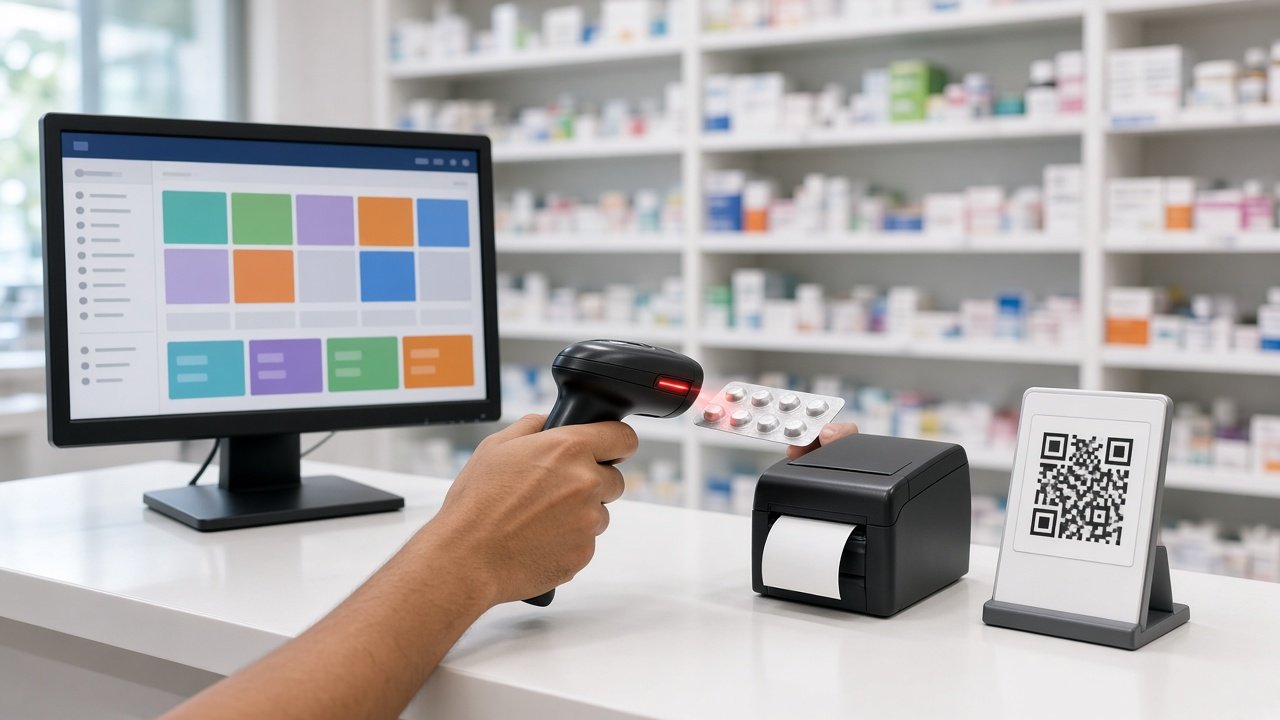
On opening day you want the counter to be fast and the records to be clean. A few things to have in place:
- Barcode billing so the pharmacist scans strips instead of typing names, which reduces wrong-item errors.
- Batch and expiry selection on every sale, so the oldest valid batch goes out first and expired items are blocked.
- Prescription-drug records for Schedule H1 sales, which must be recorded with prescriber and patient details. Read our note on Schedule H register software for what to look for.
- Low-stock and reorder alerts so chronic-medicine customers are not turned away.
- UPI, card and cash payments recorded against each bill, so your evening cash count actually matches.
For a step-by-step look at running the counter itself, see medical store billing software for counter sales and stock.
Caddayn Biller supports pharmacy billing with batch and expiry tracking, barcode scanning, GST invoices, low-stock alerts and UPI, card and cash payments, on Windows and the web. If you are setting up a new medical shop, you can download Caddayn Biller and try it with your opening stock list before the shop goes live.
A 30-day checklist for new medical shop owners
- Week 1: finalise structure, pharmacist and premises; sign and register the rent agreement.
- Week 2: complete shelving, fridge, lighting and site plan; register on ONDLS and upload documents.
- Week 3: apply for the trade licence and GST; shortlist wholesalers and billing software.
- Week 4: pre-licence inspection; load item master with batch and expiry; train staff on the counter process.
Timelines vary by district and season, so use this as a planning guide rather than a promise.
Frequently asked questions
Can I start a medical shop in Kerala without being a pharmacist?
Yes. The owner does not have to be a pharmacist, but a regular retail drug licence needs a registered pharmacist in charge of the shop. Their registration certificate and declaration are part of the application.
Which form is used to apply for a retail drug licence?
The application for a retail sale licence is made in Form 19 on ONDLS. The licence is issued as Form 20, and as Form 21 for biological items where applicable. Other forms apply to homoeopathic medicines, Schedule X drugs and restricted licences.
How long does it take to get a drug licence in Kerala?
The Kerala Drugs Control Department’s SOP lists a timeline of 28 days for the process, covering document verification, inspection and issue. Incomplete documents or premises can extend it.
Do I need GST registration for a medical shop?
You need GST registration once your turnover crosses the applicable threshold, and many shops register earlier because suppliers and institutional buyers prefer GST invoices. Check the current threshold and medicine rates with a tax adviser or on the CBIC site.
What software does a new medical shop need?
At minimum, billing software that handles batch numbers, expiry dates, GST invoices and Schedule H1 records, with stock alerts. Setting it up before opening day keeps your records clean from the first sale.