
The pursuit of the “perfect” ERP system often begins with a seductive promise: enterprise-grade power at zero cost. By 2026, the marketplace is flooded with open-source platforms, but the reality for small business owners remains fraught with hidden dangers. Selecting an ERP system is no longer just about software—it is about choosing a digital foundation that must be secure, compliant, and scalable.
The Evolution of ERP in 2026: Beyond Just “Free” Software
The Shift Toward AI-Powered and Cloud-Native Solutions
In 2026, the definition of Enterprise Resource Planning has shifted from static database management to dynamic, AI-driven operational intelligence. Modern systems do more than record transactions; they predict stock shortages, optimize manufacturing throughput, and automate routine financial reconciliations. Cloud-native architecture is no longer an optional luxury; it is the prerequisite for the agility required by today’s retail and service sectors.
Why the “Freemium” Model is Changing for Small Business
The “freemium” model has evolved, but it often disguises the gap between a basic license and a functioning business tool. While many platforms offer free entry, the transition to a fully operational system frequently requires paid modules, advanced support tiers, or custom development. Business owners must look past the “free” marketing tag and evaluate what is required to make the system truly functional for their specific industry needs.
Understanding Total Cost of Ownership (TCO) in Open-Source ERPs
The Hidden Costs of Self-Hosting: Servers, Docker, and MySQL Maintenance
The most common mistake for small enterprises is ignoring the hidden technical tax of self-hosting. Managing an open-source ERP requires more than just installation. It requires robust server infrastructure, Docker orchestration, and ongoing MySQL database maintenance. If your team does not include a dedicated DevOps professional, the cost of downtime, hardware management, and security updates will quickly eclipse the cost of a managed cloud service.
Technical Expertise Requirements: From Python to the Frappe Framework
Platforms like ERPNext utilize sophisticated backends, often requiring proficiency in the Frappe framework or Python. When you self-host, you inherit the responsibility for debugging custom scripts, ensuring system stability, and managing database migrations. Without an in-house expert, you risk system corruption that could paralyze your invoicing and inventory processes at the worst possible time.
Data Security and Protection Against Online Attacks
Security is not an afterthought; it is a critical vulnerability. When you host your own ERP system, you are solely responsible for firewalls, SSL management, and data encryption. Small businesses are increasingly targeted by ransomware and brute-force attacks. Utilizing a managed cloud solution shifts the burden of security compliance, patch management, and threat mitigation to professionals, protecting your sensitive customer and financial data from modern threats.
Why Regional Compliance is the Non-Negotiable “Killer Feature” of 2026
Navigating UAE VAT, VAT-201 Returns, and ZATCA E-Invoicing
Global open-source tools often struggle with the rigorous, localized regulatory requirements of the GCC. Features like automated VAT-201 filings, precise tax rounding, and real-time integration with local tax portals are essential. If your ERP cannot handle mandatory ZATCA e-invoicing standards, it creates a significant legal and financial liability that no amount of “free” software can offset.
The Importance of Localization: Bilingual Invoices and WPS Payroll
Operational efficiency depends on local context. Your system must support bilingual invoices that satisfy both local legal standards and client expectations. Furthermore, automating payroll through the Wage Protection System (WPS) is a vital efficiency gain. Tools that lack these localized workflows force staff to work manually, undermining the core purpose of implementing an ERP system.
Regulatory Compliance as a Barrier to Entry for Global Open-Source Tools
Global developers often treat local compliance as a low-priority plugin. This is a critical risk. If a legislative update occurs, your business needs immediate, compliant software adjustments. Choosing a solution that is built with local compliance at its core is a strategic safeguard, ensuring your business stays on the right side of the law without requiring extensive, expensive, and fragile custom coding.
Reviewing the Top Free and Open-Source ERP Contenders for 2026
ERPNext: Versatility via the Frappe Framework
ERPNext is arguably the most powerful open-source ERP available, built on the robust Frappe framework. Its modular architecture makes it excellent for manufacturing and service-based companies. However, its immense depth is its complexity. For smaller teams, the sheer number of configuration options can lead to “feature bloat,” where the system becomes more difficult to maintain than it is to use.
Odoo Community Edition (Odoo CE): The Proliferation of Community Modules
Odoo remains the market leader in terms of community-built extensions. Whether you need specialized accounting tools or niche inventory plugins, the community ecosystem is vast. The risk, however, is dependency on unverified community code. When a core Odoo update occurs, your third-party modules may break, creating a “technical debt cycle” that can cripple your operations.
Dolibarr: A Lightweight Approach for Micro-Businesses
For micro-businesses that find Odoo or ERPNext too overwhelming, Dolibarr offers a streamlined experience. It is easier to deploy and provides a solid foundation for basic invoicing and customer management. While it lacks the extreme depth of its larger competitors, its simplicity is its greatest asset for those who need a functional, easy-to-manage system without a massive learning curve.
Tryton and Apache OFBiz: Robust Solutions for High Technical Capability
Tryton and Apache OFBiz are heavy-duty frameworks designed for high-level technical customization. These are not intended for the average business owner; they are platforms for developers to build bespoke systems. Unless you are building an enterprise-grade application from scratch with a team of developers, these solutions are likely to be significant overkill.
The Enterprise Gap: Why SAP Business One and Oracle NetSuite May Be Overkill
Complexity vs. Utility for Growing Retail Businesses
For many mid-sized retailers, large-scale enterprise suites like SAP or NetSuite offer more complexity than they can effectively manage. The high-level features designed for multinational corporations often create bottlenecks for local operations. A system should fit the business, not force the business to adapt its entire workflow to satisfy the limitations of an over-engineered software suite.
The Burden of Perpetual License Fees and Implementation Cycles
The enterprise market is defined by long implementation cycles and massive upfront capital expenditures. For a growing business, these costs are often prohibitive. Perpetual licenses, expensive maintenance contracts, and specialized consulting fees can trap a growing company in a financial commitment that restricts cash flow rather than fueling growth.
Caddayn Biller: The Strategic Bridge for Compliance and Automation
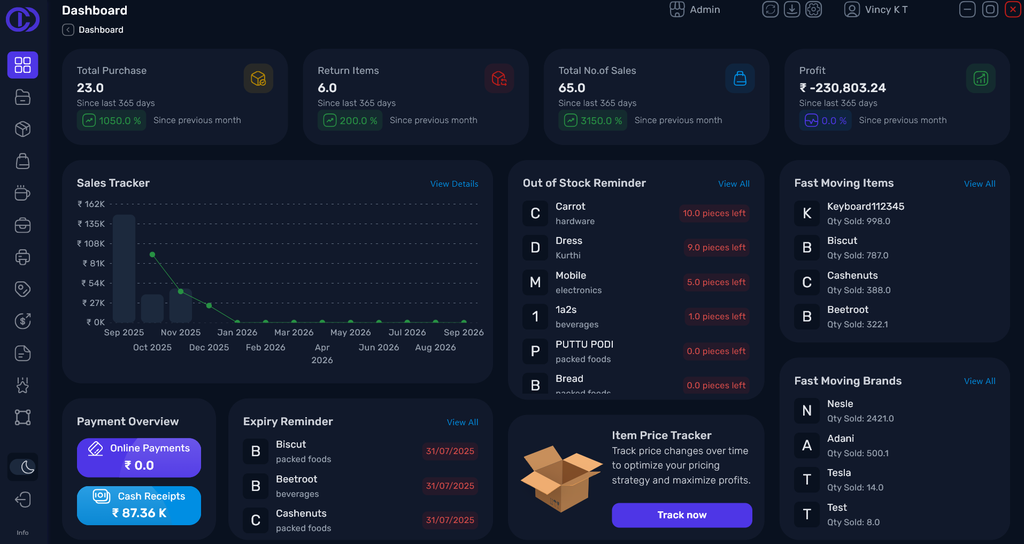
Simplifying Financials: Automated Billing and Real-Time Analytics
Caddayn Biller serves as the vital link for businesses that need enterprise-grade compliance without the complexity of a monolithic ERP. By focusing on automated invoicing and real-time financial analytics, it bridges the gap between raw data and actionable insights. It transforms your accounting processes into a streamlined asset rather than a manual chore.
Inventory Management and Omnichannel Visibility
Inventory management is the heartbeat of any retail business. Caddayn Biller provides the visibility needed to manage stock across multiple channels, ensuring that your online store and physical warehouse remain in perfect sync. This reduces the risk of overselling and improves your ability to manage supply chain fluctuations with precision.
Built-in Security Solutions: Protecting Customer Data and System Integrity
Security is baked into the architecture of Caddayn Biller. By offloading the technical risks of data management and infrastructure security, it allows business owners to focus on strategy rather than system patching. This proactive security posture ensures that your customer data is safe, maintaining the trust that is foundational to any successful business relationship.
The Value of a Managed Cloud ERP vs. DIY Open-Source
The ultimate value proposition is peace of mind. While DIY open-source systems demand constant attention, a managed solution like Caddayn Biller provides professional-grade support and maintenance. This is not just an expense; it is an investment in operational continuity. You gain the power of advanced software without the recurring burden of acting as your own IT department.
Core Operational Modules Your 2026 ERP Must Have
Advanced Warehouse Management Systems (WMS) and Landed Cost Tracking
Your ERP must handle the nuances of modern supply chain management. Advanced WMS capabilities, such as landed cost tracking, allow you to understand the true profitability of every item by factoring in shipping, customs, and taxes. Without this, your financial reports are likely inaccurate.
Integrated POS Systems and Multi-Channel Retail Support
In 2026, the distinction between “online” and “offline” sales is obsolete. Your ERP system must integrate seamlessly with Point of Sale (POS) hardware and e-commerce platforms. This creates a single source of truth for all sales data, enabling you to make informed decisions about inventory replenishment and customer loyalty.
Customer Relationship Management (CRM) and Loyalty Programs
A modern ERP must include integrated CRM capabilities that track customer history across every touchpoint. Loyalty programs should be an automated extension of your CRM, allowing you to reward repeat customers without manual intervention. This level of automation is essential for sustaining growth in a competitive, customer-centric market.
Supply Chain Management and Marketplace Inventory Synchronization
Whether you are selling on your own website or through third-party marketplaces, your ERP must provide real-time inventory synchronization. This ensures that every order is fulfilled accurately and on time, protecting your seller ratings and customer satisfaction levels.
Conclusion
The selection of an ERP system in 2026 is a defining moment for any business. The “free” software myth has been replaced by the reality of Total Cost of Ownership, where technical burden, security, and regional compliance are the true metrics of success. While platforms like ERPNext, Odoo, and Dolibarr provide the functional engines, the “Implementation Chasm” remains a significant barrier for the majority of businesses.
To successfully navigate this landscape, business owners must prioritize managed, compliant solutions. Caddayn Biller functions as the strategic bridge, offering the automation and local regulatory adherence that regional businesses require to stay compliant with UAE VAT and ZATCA standards. By moving away from the DIY burden of self-hosting and toward managed, cloud-based ERP solutions, you secure not only your operational efficiency but your long-term scalability.
Next Steps for Success:
- Audit your current manual processes: Identify which repetitive tasks—such as invoicing or inventory reconciliation—are costing you the most time.
- Evaluate your technical capacity: If you lack an in-house DevOps team, prioritize managed cloud solutions to avoid the hidden costs of server management.
- Prioritize local compliance: Ensure any system you choose is native to the regulatory requirements of your region.
- Schedule a consultation: Reach out to experts who understand the intersection of technology and business strategy to map out a phased implementation plan that grows with your company.
The goal is to stop managing your software and start letting your software manage your business. Choose a partner that understands the stakes, and you will find that the right ERP system becomes your most valuable asset.