
What Is the Future of ERP Systems in the AI Era?
With the introduction of AI, this structure has changed at a fundamental level. Today, ERP systems extend beyond data storage and basic processing. Instead, they analyze information, interpret patterns, and guide business actions. As a result, ERP platforms in the AI era are evolving into autonomous business systems rather than static operational tools.
The Shift from Systems of Record to Systems of Intelligence
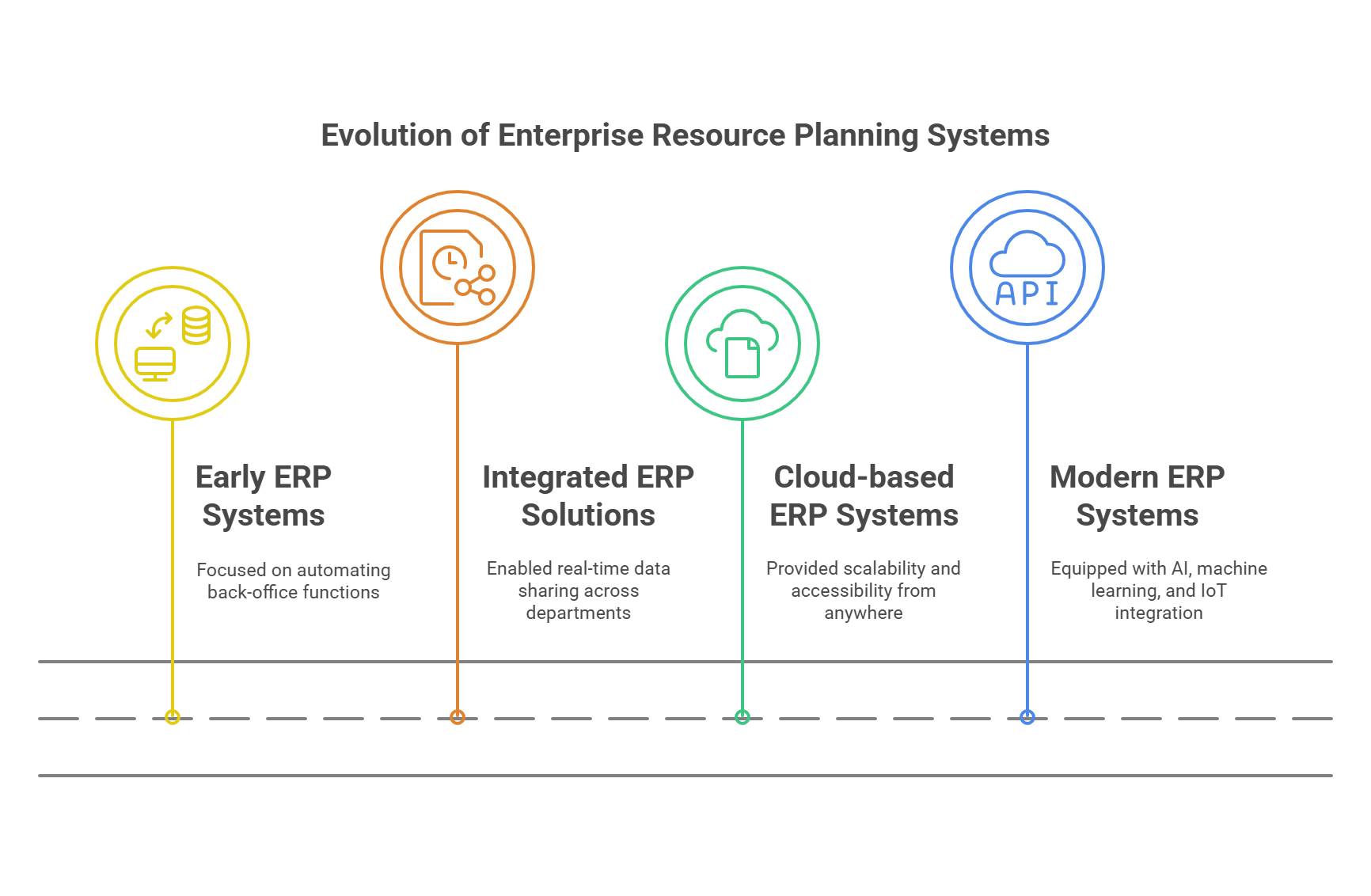
Traditional ERP platforms functioned mainly as systems of record. Data was entered, stored, and later reviewed by users. Decisions depended on reports and dashboards created after processes were completed.
AI transforms this role entirely. Modern ERP platforms now act as systems of intelligence. Data is continuously analyzed while processes are running. Patterns are detected without manual effort. Insights are generated automatically and delivered in real time.
Over the next five years, ERP systems are expected to move away from data-entry-heavy structures. Instead, they will operate as intelligent business engines. AI will serve as the core component driving this transformation.
How AI Enhances ERP Capabilities
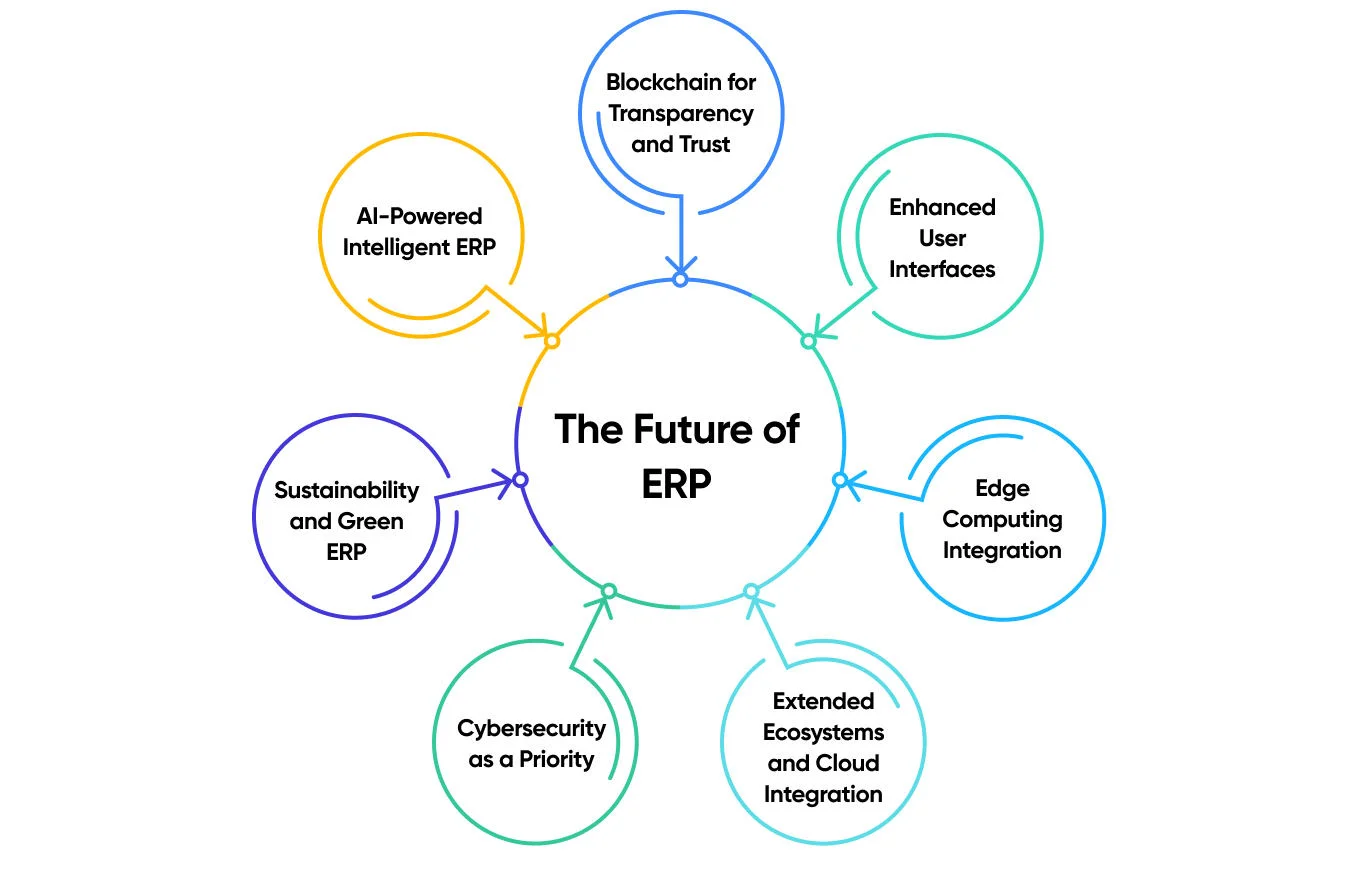
AI introduces advanced capabilities that earlier ERP systems could not support. Most notably, it significantly improves data analysis speed. ERP platforms can now process large volumes of structured and unstructured data within seconds. As a result, businesses can evaluate complex scenarios almost instantly.
In addition, AI strengthens automation across ERP systems. It actively manages routine tasks such as data validation, reporting, and transaction processing. Previously, employees handled these tasks manually. Consequently, automation reduces human error and ensures greater consistency across operations.
Furthermore, AI enhances forecasting and planning accuracy. By examining historical data, ERP systems can anticipate future trends more effectively. Demand patterns, cost fluctuations, and operational risks become visible at an early stage. Therefore, organizations base decisions on data-driven insights rather than assumptions.
User Interaction in AI-Enabled ERP Systems
ERP usability has often been a challenge for organizations. Complex interfaces and multiple screens slowed adoption. AI addresses this issue through natural language interaction.
Users can ask questions in simple language. Reports and insights are generated instantly. This approach reduces dependency on technical expertise. Employees across departments can access enterprise data without specialized training.
AI also acts as a user aid within ERP systems. Recommendations are provided based on observed patterns. Process improvements are suggested automatically. Employees receive guidance during daily operations, improving efficiency.
Business Impact of AI-Driven ERP Platforms
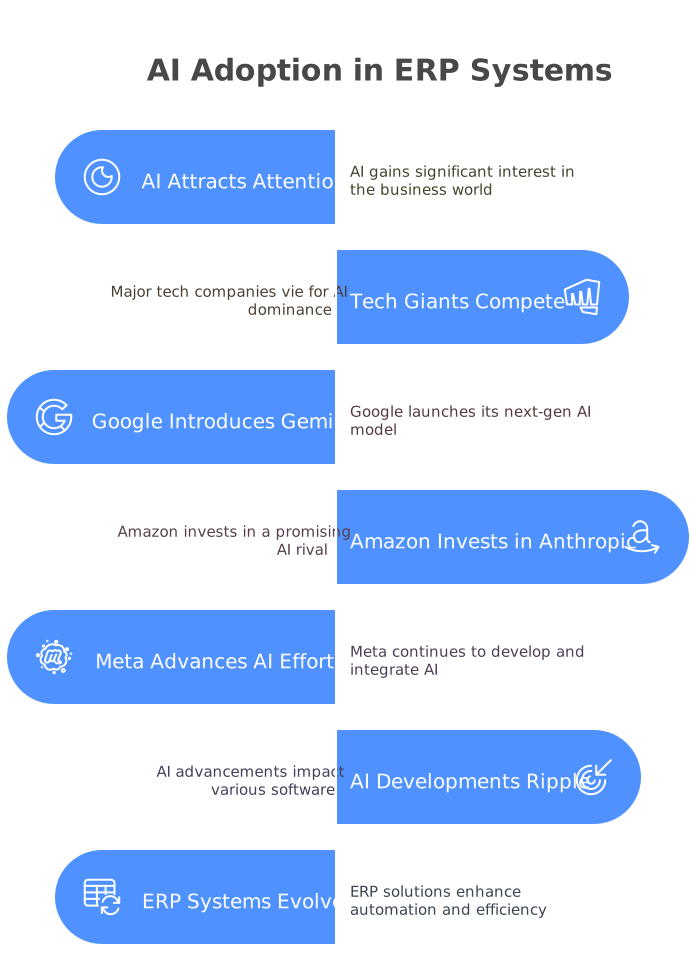
AI-powered ERP systems significantly improve visibility across the organization. Business leaders can monitor performance in real time and track key metrics continuously. As a result, teams identify risks and opportunities much earlier than before.
At the same time, AI enhances the overall customer experience. Accurate and connected data improves order fulfillment, service quality, and response times. Consequently, business processes become more reliable and predictable.
Operational efficiency also increases as AI automates workflows. Employees move away from repetitive tasks and focus on higher-value work. Over time, this shift encourages critical thinking, creativity, and strategic contribution.
Key benefits of AI-enabled ERP systems include:
Improved forecasting accuracy
Reduced operational errors
Faster decision-making
Better resource utilization
Greater organizational agility
Together, these advantages support long-term business stability and sustainable growth.
ERP and Strategic Planning in the AI Era
ERP systems form the foundation of enterprise operations. When organizations combine ERP with AI, these platforms also support strategic planning. Through continuous data analysis, businesses identify market trends more effectively. At the same time, ERP systems track customer behavior patterns in real time.
Moreover, AI enables ERP platforms to respond quickly to changing conditions. Organizations can make adjustments before problems escalate. As a result, businesses reduce risk while strengthening their competitive position.
In addition, AI simplifies reporting and analysis. ERP systems generate customized reports automatically and reduce manual calculations. Therefore, decision-makers receive relevant information in formats that match their operational needs.
Key AI-Integrated ERP Platforms
Major ERP vendors have increasingly embedded AI capabilities directly into their platforms. As a result, ERP systems now offer more intelligent automation, predictive insights, and user-friendly interaction. Several leading platforms illustrate how AI is shaping modern ERP ecosystems.
SAP S/4HANA integrates AI through its copilot, Joule. This capability enables conversational interaction, industry-specific AI models, and automation of complex processes. In areas such as supply chain planning and finance, AI supports faster analysis and improved decision-making.
Microsoft Dynamics 365 incorporates OpenAI-powered Copilot across its application suite. This integration supports real-time assistance, report generation, and anomaly detection. Additionally, it enables seamless collaboration within Microsoft 365 tools such as Excel and Outlook, improving workflow continuity.
Oracle Cloud ERP/NetSuite rely on Fusion AI to enhance financial and operational processes. The platform automates financial close activities, optimizes inventory management, and delivers predictive analytics for cash flow and demand forecasting. These features help organizations plan more effectively.
Workday applies AI primarily within human capital management and financial management. It supports talent acquisition, workforce analytics, and financial anomaly detection. By doing so, Workday strengthens data-driven workforce and financial planning.
Salesforce embeds its Einstein AI model across its ecosystem. AI supports lead scoring, churn prediction, content recommendations, and chatbot interactions. Beyond customer relationship management, Einstein extends intelligence into back-office operations.
Odoo offers an open-source and modular ERP platform with accessible AI features. It focuses on small and mid-sized businesses by providing practical AI tools for order processing and accounting automation. This approach makes AI-enabled ERP capabilities more widely available.
Caddayn approaches ERP development with a focus on adaptability, integration, and data-driven intelligence. Rather than positioning ERP as a fixed software product, Caddayn emphasizes flexible systems that align with evolving business needs in the AI era. This approach reflects a broader shift in ERP design toward modular, scalable, and intelligent platforms.
Within Caddayn’s ERP framework, AI plays a supportive and augmentative role. The system leverages AI-driven analytics to help organizations interpret enterprise data more effectively. By analyzing operational patterns and performance indicators, the platform supports informed decision-making across departments such as finance, operations, and planning.
Caddayn also emphasizes process automation as a key outcome of AI integration. Routine workflows, reporting activities, and data reconciliation tasks can be streamlined through intelligent automation. As a result, organizations reduce manual effort while improving consistency and operational accuracy.
Another important focus area is usability. Caddayn prioritizes simplified data access and actionable insights over complex interfaces. AI-enabled reporting tools help convert large datasets into meaningful summaries that decision-makers can understand quickly. This design supports both operational users and strategic leaders.
From a strategic perspective, Caddayn aligns its ERP solutions with long-term business planning. AI-assisted forecasting and performance monitoring help organizations respond to market changes and operational risks more effectively. Instead of reacting to problems after they occur, businesses gain the ability to anticipate challenges earlier.
Overall, Caddayn represents an ERP approach shaped by AI-driven intelligence, operational efficiency, and adaptability. By integrating AI as an enabling layer rather than a standalone feature, Caddayn reflects how modern ERP platforms evolve to support complexity, growth, and data-centric decision-making in the AI era.
Together, these platforms demonstrate how AI integration is redefining ERP functionality across industries and organization sizes.
Conclusion
ERP systems are entering a new phase of evolution driven by AI. Instead of merely managing data, modern ERP platforms now interpret information and guide decisions. Real-time insights and predictive intelligence support faster and more accurate decision-making.
As AI continues to advance, ERP systems will serve as key drivers of organizational intelligence. Businesses that adopt AI-enabled ERP platforms will navigate complexity more effectively and position themselves for long-term growth in the digital era.